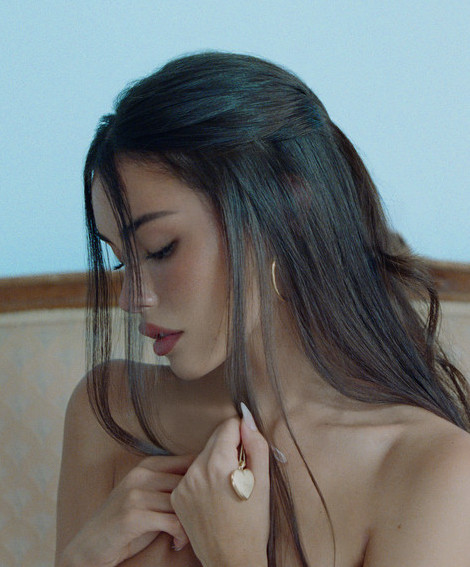
It appears that New York not only has a new mayor, but also a new “it” girl.
Democratic Socialist Zohran Mamdani sealed a notable victory as the 111th mayor-elect of New York City over former Governor Andrew Cuomo and Republican nominee Curtis Sliwa. Unconventional in innumerable ways, Mamdani is the first Muslim, Indian American and millennial to assume the position.
In the midst of Mamdani’s campaign, his 28-year-old wife, Rama Duwaji, boosted his image in an unorthodox capacity. Traditionally, the responsibility of the first lady is to be a subdued and elegant presence that enhances the image of her husband’s campaign. Endlessly standing beside him, she hopes to gain the support of voters from all sides of the political spectrum — as First Lady Jacqueline Kennedy so gracefully exemplified.
Duwaji’s presence sent a different message. A Syrian artist and activist from Texas, she was rarely seen with her husband. Generally, there tends to be this lingering question of whether the first lady’s political stance aligns with that of her husband’s: that is certainly the case with Duwaji.
Her values are communicated in her art, rather than words. A vast array of political animations can be found on her Instagram, revealing that she is a steadfast advocate for Palestine and deeply detests the systemic oppression Muslim women encounter in arrangements like child marriage. Her work also shares love for her culture, cuisine and summers in Damascus — featured in outlets such as The New Yorker, The Washington Post and the BBC.
One must dig extensively to find any trace of the New York mayor-elect who she happens to be married to, and that is what onlookers admire about her: the preservation of independence and individuality despite her marital status.
@kamsi_ann on TikTok made a video speaking to the mystique Duwaji carries.
“She has her own identity independent of him, and I love that her relationship is one of the least interesting things about her,” she said.
“She was that girl before him AND with him. She has her own identity, she’s not just there to be a tail to her husband,” a viewer commented.
On election night, she stood next to the man she married back in February. An uproar about her particularly was evident as she stood confidently inside the Brooklyn Paramount Theater in New York. Fans compared her haircut to Audrey Hepburn’s in the movie “Sabrina” (1954) and her enigmatic stare to Princess Diana’s.
Making a political statement, she wore a laser-etched denim black top designed by Palestinian-Jordanian designer, Zeid Hijazi — a brand that blends ancient folklore with Arab futurism. She paired it with a black velvet lace Ulla Johnson skirt.
One word to describe her husband’s campaign: insurgent. His campaign was a rebellion against the powerful institutions which dominate the city of New York, echoing a message to bring power back to the people. His strategies were nothing short of imaginative and even made appearances in nightclubs of all places.
Insurgent captivates the essence of Duwaji as well. Keeping her maiden name, speaking up for oppressed groups and being unapologetically herself in a world that loses individuality by the day is what makes her an official trendsetter.