“‘It’s not normal for the world to have a unipolar power. That was an anomaly. Eventually, we’re going to reach back to the point where you have a multipolar world,’” said Emma Ashford, quoting a 2025 remark by U.S. Secretary of State Marco Rubio.
The comment, noted political scientist Ashford told an audience at Oakland University, proved a cogent concession from Washington that the era of overwhelming American dominance in world affairs may be ending.
Ashford, a senior fellow with the Reimagining U.S. Grand Strategy program at the Stimson Center, delivered the 2026 Meadow Brook Lecture in International Affairs on Weds., March 11 in Meadow Brook Hall. The event was hosted by the university’s political science department, the Barry M. Klein Center for Culture and Globalization and the Center for Civic Engagement.
Ashford’s lecture, titled after her 2025 book, “First Among Equals: U.S. Foreign Policy for a Multipolar World,” examined how shifts in global power are reshaping American foreign policy and forcing policymakers to reconsider long-standing assumptions about the United States’ role in the international system.
“It’s a fascinating time to be working in U.S. foreign policy,” Ashford said. “The world is changing. U.S. foreign policy is trying to catch up — to figure out how we adapt to a new era.”
Ashford said the “unipolar moment” — the period following the collapse of the Soviet Union — marked a rare era when the United States stood as the world’s single dominant superpower.
Throughout the unipolar period, she explained, both Republican and Democratic policymakers embraced strategies aimed at reshaping the global order, blending idealistic notions of neoconservatism and liberal internationalism into a bipartisan approach to U.S. hegemony.
“What they all agreed on was the importance of trying to transform the world for the better,” Ashford said. “They wanted to take this power, this influence, this freedom that had arisen from the defeat of the Soviet Union and use it to lock in that moment for as long as possible.”
Examples ranged from expanding international institutions such as NATO and the United Nations to the Bush administration’s Freedom Agenda, which sought to deepen globalization and spread democracy abroad, unfettered by any necessity of intermittent military intervention in doing so.
Ashford argued that while these policies produced positive outcomes — including notable strides in reducing poverty — many of their broader goals did not come to fruition. Attempts to remake the world through American power and influence often proved more complicated and costly than policymakers anticipated.
“They were incredibly transformative,” she said. “They also have in common that they pretty much all failed.”
Ashford emphasized that the end of the unipolar era is not simply the result of mistaken policy decisions. Economic development, demographic change and the growing military and technological capabilities of other countries have gradually reduced the United States’ relative power, she said.
“The unipolar moment is ending because of these big trends in international relations,” she said. “States rise, states fall, and the ways in which they do that create many of the patterns of war and peace that we see in history.”
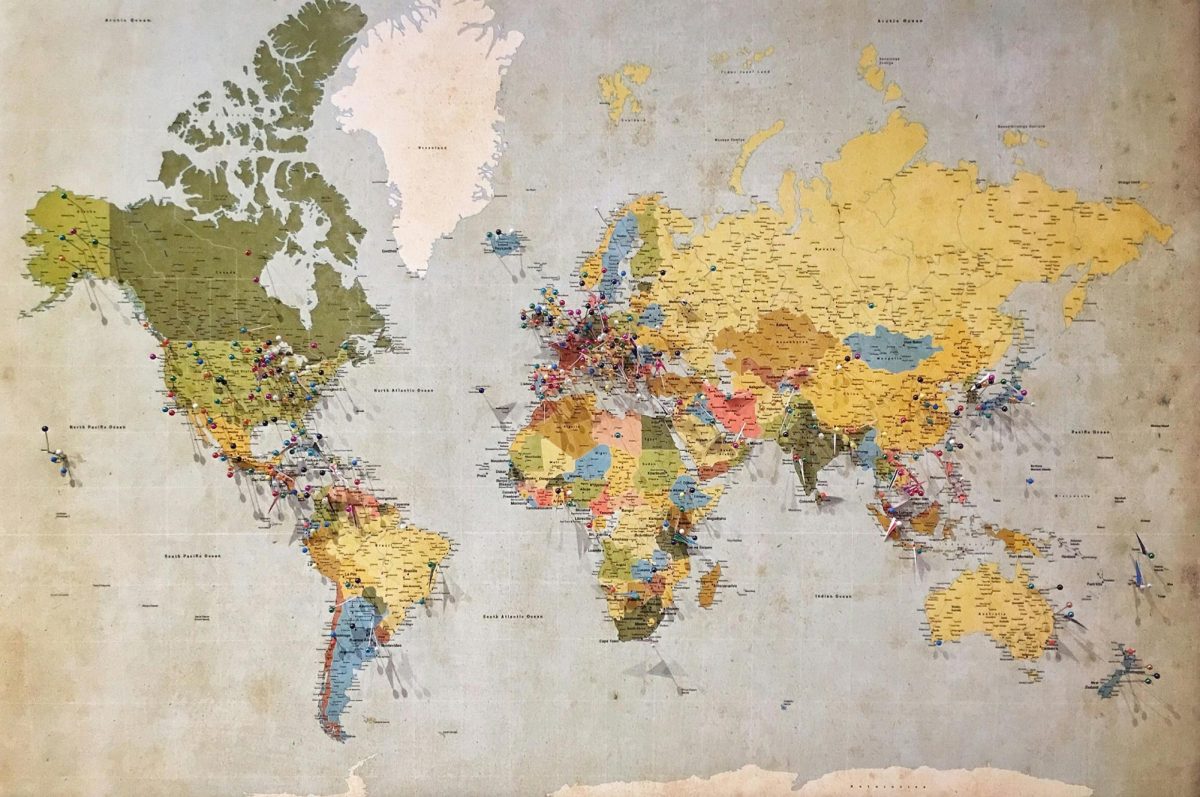
Ashford highlighted alternate power structures such as a bipolarity or multipolarity, in which two or several powerful states shape global outcomes, respectively.
“I think we are headed for some form of mixed multipolarity,” Ashford said. “There’s a U.S.–China rivalry in the world, but they’re embedded in a much wider system of regional powers.”
Countries such as Turkey, Brazil, Japan, Poland and the United Kingdom increasingly act as influential “middle powers,” she said.
“It’s not America standing atop the world as one actor that can largely dictate events,” Ashford said. “That’s not going to work anymore.”
Ashford challenged the assumption that a decentralized system is inherently more dangerous than one dominated by a single superpower or two rival blocs.
“There might be more small-scale wars, regional wars, but fewer great power wars,” Ashford said. “Multipolarity might be no worse for the United States than any other system.”
One major factor complicating comparisons with earlier eras, she said, is the existence of nuclear weapons.
“We’ve never actually had an era of multipolarity in which nuclear weapons exist,” Ashford said. “Have the last 75 years been unusually stable because of polarity, or simply because of nuclear weapons? We actually don’t know.”
Adapting to this changing world will require the United States to rethink how it approaches foreign policy, Ashford said.
“My case is that multipolarity actually offers significant opportunities for the United States to have a more flexible, less costly foreign policy,” she said. “But doing so is going to require U.S. policymakers to abandon the unipolar mindset.”
For decades, American leaders have grown accustomed to dictating events internationally, she said. In a multipolar world, the United States will need to rely more on negotiation, compromise and prioritization.
“We have tried for 30 years to do everything, everywhere, all at once,” Ashford said. “With the rise of China and the relative decline in U.S. power, we are facing constraints.”
Ashford outlined several steps she believes could help the United States adapt, including defining national interests more narrowly, prioritizing threats and encouraging allies to take greater responsibility for their own defense.
“We need to move from those transformative approaches to something that really is much more about national interests,” she said.
Ashford also emphasized the importance of economic strategy.
“If other countries have a choice of who they deal with, why would they deal with us if we are just offering the stick and never offering the carrot?” she said.
During the question-and-answer session, students, faculty and community members asked Ashford about issues ranging from climate change and nuclear proliferation to the war in Ukraine and shifting U.S. alliances.
One audience member asked whether countries that have historically clashed with the United States might continue to distrust American engagement even if U.S. foreign policy becomes less coercive.
Ashford acknowledged that historical grievances remain powerful in international politics.
“Chinese foreign policy today is influenced by harms that were inflicted on them a hundred years ago,” she said.
She countered that shared interests can still foster opportunities for cooperation.
“When we start to think about what we can all benefit from, that is one way to start to get past some of that mistrust,” she said.
“We need to reintroduce that realism that’s been missing for the last 30 years,” Ashford said. “We need to try to think of a way that the U.S. can learn to live with this multipolar world as it is, not as we want it to be.”