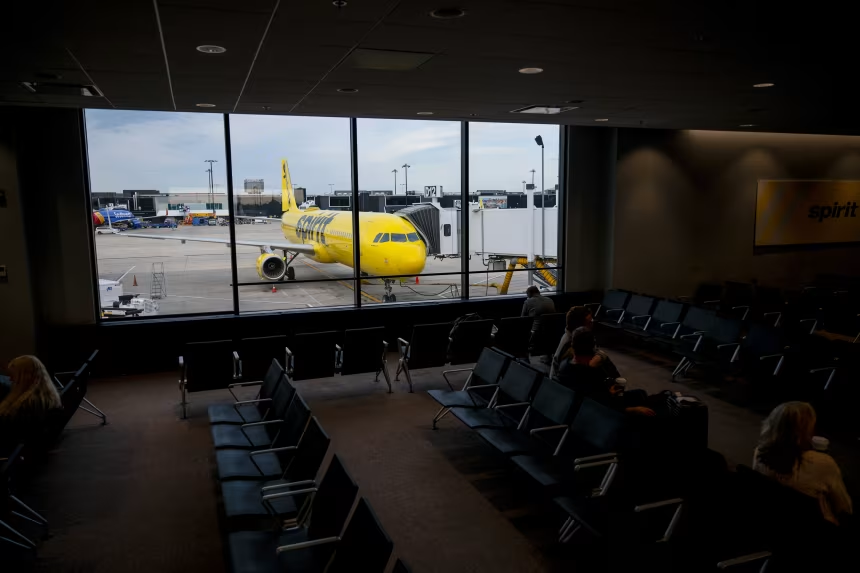
On May 2, Spirit Airlines shut down operations after 34 years of service, cancelling all flights nationwide and leaving travelers stranded, including passengers at Detroit Metropolitan Wayne County Airport.
Spirit counties and kiosks sat empty as travelers arrived to find their flights canceled with little notice.
Airport officials said the airline has ceased operations and advised passengers not to come to the airport if they were scheduled to fly Spirit.
Transportation Secretary Sean Duffy said passengers should not go to the airport as the airline has fully stopped operating.
“Spirit does not have airplanes in the air flying as of this morning. Their call centers are closed and they don’t have staff at ticket counters,” Secretary Duffy said. “If you have a flight scheduled with Spirit Airlines, don’t show up at the airport.”
“The Department of Transportation is coordinating with other U.S. airlines to help stranded passengers rebook travel,” Secretary Duffy also advised.
Many travelers were left scrambling to make new arrangements after the sudden shutdown disrupted flights across the United States, the Caribbean and Latin America.
Some passengers arrived with trips already planned, only to learn their flights were no longer operating.
The closure also affected employees across Metro Detroit. Flight attendants and airline staff learned of the shutdown early Saturday as operations came to an immediate stop.
Nationwide, the shutdown impacted approximately 17,000 employees and marked one of the largest airline closures in the United States in recent decades. Thousands of flights were canceled, leaving passengers searching for alternative travel options.
The airline shut down after failing to secure a $500 million rescue deal, which collapsed following disagreements between the company and its creditors. Without additional funding, the airline said it could no longer continue operating.
The airline cited financial hardships, including rising fuel costs in recent weeks, as a key reason for the shutdown.
The airline’s final flights landed early Saturday, including a last flight from Detroit to Dallas, marking the end of its operations after more than three decades.
Spirit had been facing financial challenges for years, including debt and growing competition from larger carriers. The airline struggled to maintain its ultra low-cost business model as operating expenses continue to rise.
A previously planned merger between Spirit Airlines and JetBlue was blocked by federal regulators on antitrust grounds.
Some Republican lawmakers have argued that the decision limited the airline’s ability to compete, while some Democratic leaders have pointed to broader economic pressures, including inflation and fuel costs, as the primary costs.
The shutdown has raised concerns about competition and pricing across the airline industry.
With fewer low-cost carriers available, analysts say ticket prices could increase as demand remains high and options become more limited.
Major airlines, including American Airlines, Delta Airlines, United and Southwest Airlines, have begun offering limited discounted fares to help stranded passengers, though availability varies depending on routes and demand.
In Michigan, where travelers relied on Spirit for lower-cost flights, the impact is immediate as prices fluctuate and fewer budget options remain, for many travelers across the state.