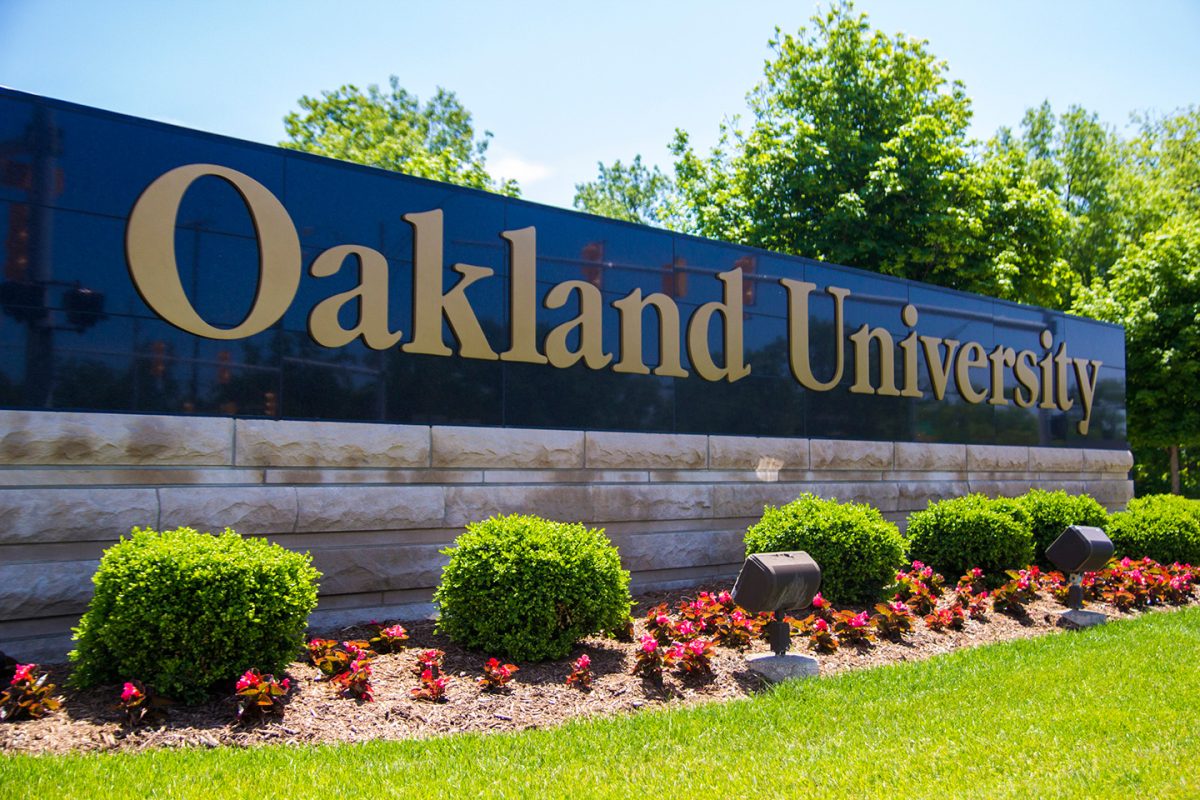
On Tuesday, April 7, students at Oakland University gathered in the Stinson Center in Elliott Hall for an inside look at sports marketing during the American Marketing Association (AMA) at OU speaker event, Digital Marketing Insights with Detroit Red Wings.
Michelle Sutherby, a social media content designer specializing in graphic design, and Staci Remejes, a social media manager for the Detroit Red Wings, shared insights into how their roles shape the team’s digital presence and marketing strategy.
“Social media is never really off,” Remejes said, highlighting the constant demands of the industry.
The team structures its workflow around game days, practice days, and off days.
“We kind of split our season into three silos,” Remejes explained.
Game days are especially fast-paced, with content produced within minutes.
“We’re getting that stuff out as quickly as possible to keep our fan base engaged,” Remejes said.
Practice days allow for lighter, personality-driven content.
“That’s when we get a lot of our light, fun, personality content,” Remejes added.
The Red Wings team hires specialists in graphic design and video editing to accelerate real-time content creation.
“Obviously, we felt it was necessary to kind of bring specialists on, in these areas… Michelle will flip around a graphic if something happens in-game,” Remejes explained, describing the rapid turnaround required during live events.
Emphasizing the importance of being prepared but flexible, Sutherby said, “There’s other times where it’s like, it happens like that, and I just have to be on top of it.”
Their work supports key business goals, from selling out games to boosting season ticket revenue.
“The main objective is to sell out every game, increase season ticket revenue,” Remejes said.
Collaboration across departments is essential.
“We work with ticket sales, communications, PR, community relations … pretty much everybody,” Remejes noted.
The team also tailors content depending on the platform.
“What we put up on TikTok is different … versus Facebook, where people just want the facts.”
Staying current with trends is another constant challenge.
“We’re just seeing stuff … and thinking like, ‘Oh, how can we do that for our brand,’” Remejes said.
“I spend a lot of time scrolling Pinterest,” Sutherby added. “To kind of set inspiration aside.”
Legal restrictions prevent the use of copyrighted music, so trends must be adapted creatively.
The team also uses artificial intelligence in subtle ways.
“It’s nice for captioning videos,” Remejes said.
While Sutherby emphasized authenticity, “I don’t really use it for anything personally … I want to be different and authentic.”
Building trust with players is another key part of the work.
“It’s all about reading a room and knowing when to do things,” Remejes explained.
For students interested in sports media, Sutherby highlighted the importance of showcasing creative work.
“I love being able to show what the process of it is,” Sutherby said. “I think it’s a really cool thing.”
The event provided a realistic look at the fast-paced, constantly evolving nature of sports marketing.
“It’s just a constant moving thing,” Remejes concluded, underscoring the dynamic challenges and opportunities in the industry.