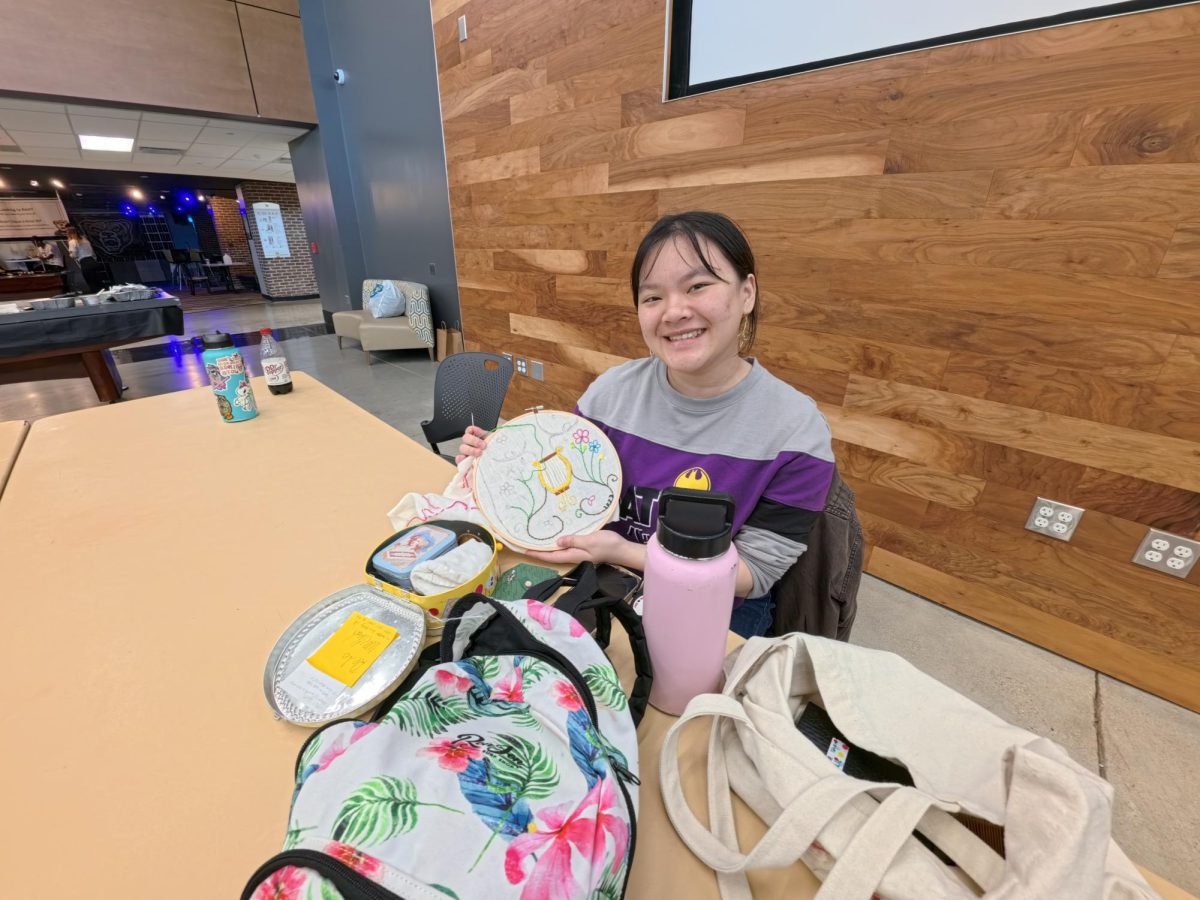
Oakland University students gathered in the Oakland Center Habitat on Friday for the OUSC Repair Cafe, an event focused on sustainability, skill-building and reducing waste on campus.
Hosted by the Oakland University Student Congress, the event ran from 12 to 3 p.m. and invited students to bring broken or worn items to be repaired instead of being discarded.
Throughout the afternoon, students arrived with clothing, jewelry and small electronics, looking for ways to extend the use.
Inside the Habitat, tables were arranged with tools and materials, creating a collaborative space where volunteers assisted with repairs. Students could leave items with volunteers or stay to observe the process and learn how everyday objects can be fixed.
Riley Demond, director of sustainability for Student Congress, said the event is part of a broader effort to promote eco-conscious habits among students.
“I plan events and lead initiatives that focus on making campus more sustainable, while also helping students live a little more eco-conscious in their everyday lives,” Demond said.
The event was formally established through congressional legislation, C.B. 66-29, introduced by OUSC President Marcus Johnson. The bill amended the duties of the director of sustainability to include planning and coordinating a yearly Repair Cafe, reinforcing the organization’s commitment to sustainability.
“The Repair Cafe is actually written into our bylaws of the director of sustainability we’re expected to continue hosting to support students and sustainability efforts.”
Demond said the goal is to provide a service that is directly useful while reducing waste.
“A lot of the items people bring in would otherwise be thrown away or just sit unused, so this gives them a second life,” Demond said.
Attendees brought items such as clothing with rips or missing buttons, broken jewelry and small electronics like cracked phone screens and remotes. Some items also carried personal value, making students more interested in repairing them rather than replacing them.
The event emphasized sustainability by encouraging students to reconsider throwing away damaged belongings.
Instead, the Repair Cafe promoted reuse and reduced the amount of waste sent to landfills.
Molly Nguyen, a student volunteer, said events like the Repair Cafe are important in a society that often prioritizes replacing items over repairing them.
“I think it’s important to not just disregard things that may seem broken, especially if the repair might be easy or it can last a lot longer if you take a little bit more care of it,” Nguyen said.
Tanzima Saima, an attendee, said she came to the event to get more involved on campus and contribute her time.
“I just want to get more involved on campus and find ways to help,” Saima said. “Events like this bring the communities together and create a good environment for students to get involved.”
Kristian Hammond, a student volunteer focusing on electronics, said repairing items is especially important as costs continue to rise.
“Otherwise, things just get tossed out,” Hammond said. “With the rising price of computer components, it’s even more that we reuse what we already have.”
Demond said events like the Repair Cafe are important because they show students that repairing items is achievable.
Not only do participants save money and keep meaningful belongings, but they also gain new skills.
“Not only do people save money and keep items they care about, but they also learn skills they might not have learned otherwise,” Demond said. “With support from the Kresge Library Makerspace, students can learn skills like sewing and feel more confident fixing things themselves.”
With support from the Kresge Library Makerspace, students had access to guidance and resources for repairs. The Makerspace team helped ensure repairs were done safely and correctly, especially when using tools like sewing and embroidery machines.
Drew Ulmer, the coordinator of the Makerspace, emphasized the importance of learning life skills through sustainability.
“It is important to learn the necessary skills to provide for yourself and to make sure that the things that you have will last,” Ulmer said.
Through teaching members of the OU community how to use tools provided by the Makerspace, Ulmer empowers the community through skill development.
“I’m a big proponent of having materials, tools and clothes that will last a lifetime,” Ulmer said. “In a world obsessed with consumerism, it is important to have the skills necessary to fix and repair items to make them last longer.”
Many Oakland University students remain unaware of the resources that the Kresge Library provides through the Makerspace.
While attending the Repair Cafe, Ulmer raised awareness of the resources that the Makerspace provides for the campus community.
“Not everyone knows about the Makerspace, so this is a good way to help out the students, while also telling them that the resources are free and available for them to learn how to use,” Ulmer said.
Organizers also measured success beyond the number of items repaired.
“It’s definitely not just about how many items get fixed,” Desmond said. “We’re also looking at whether people leave feeling more confidence in their ability to repair things on their own.”
Demond said one goal is for students to leave feeling more confident in the ability to fix things alone.
Another is increasing awareness of campus resources such as the Makerspace and the Library of Things.
Volunteers helped set up, assisted with repairs and organized donations. To ensure safety, volunteers signed waivers and trained staff supervised the use of certain equipment.
Free food and refreshments contributed to a relaxed environment, allowing students to engage with others while waiting for items to be fixed and learning new repair skills.
Events like the repair cafe reflect a growing national movement focused on sustainability.
Repair cafes have become increasingly popular among communities and college campuses, encouraging individuals to fix items rather than discarding them. By providing access to tools, guidance and shared knowledge, these events promote more consumable habits.
As the event concluded, volunteers carefully packed up tools after welcoming a steady stream of participants throughout the day.
Organizers are hopeful about expanding the Repair Cafe in the future, potentially holding it once each semester to build on its growing community impact.