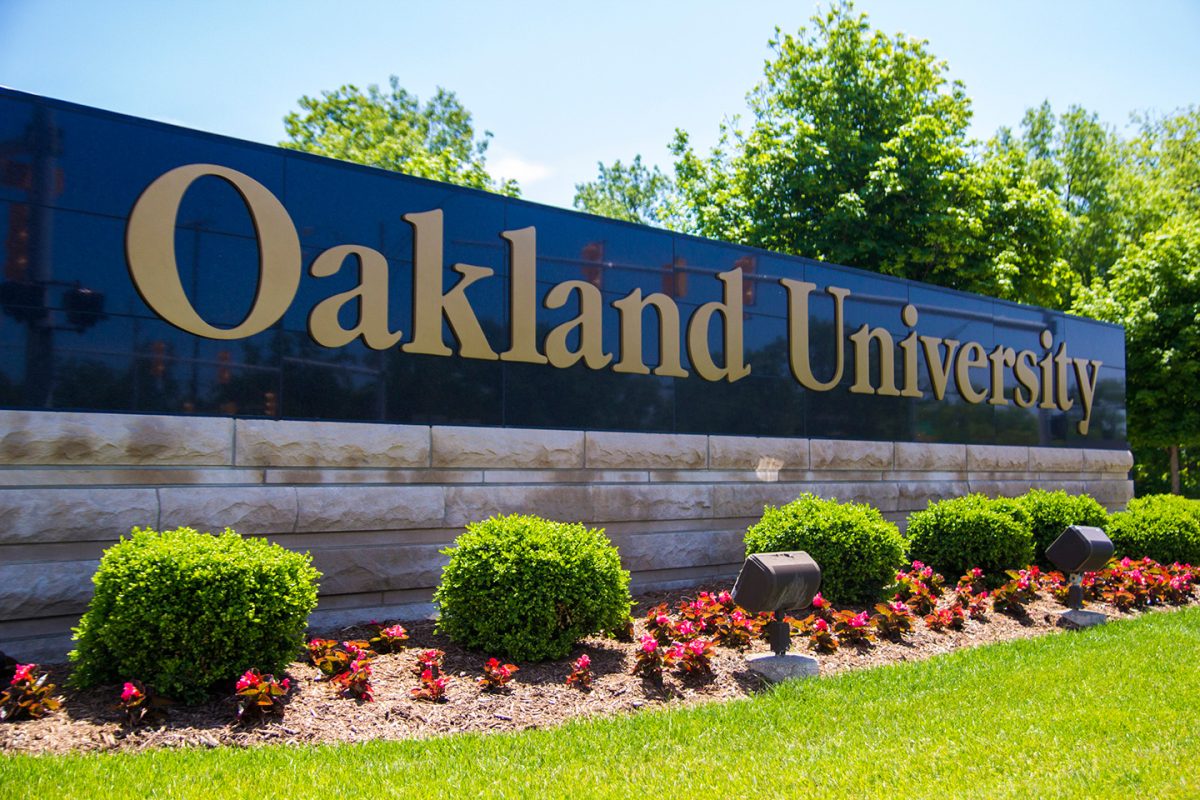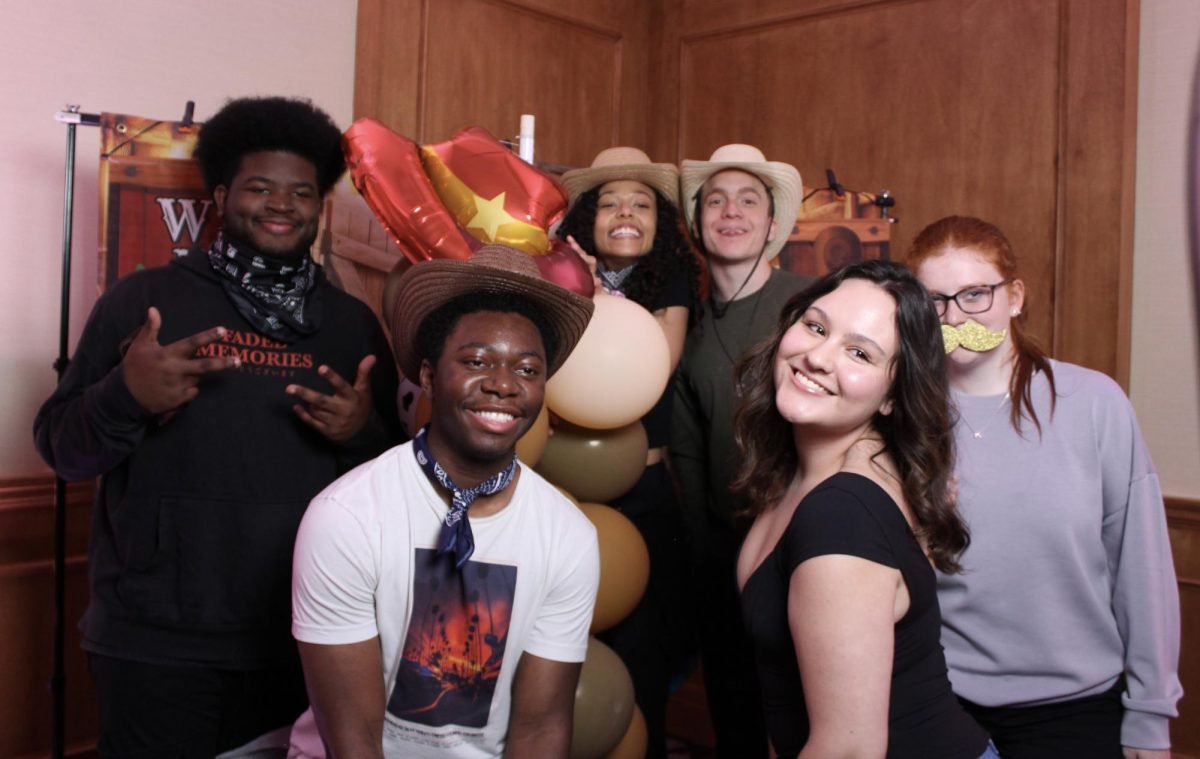
Students and community members gathered for the “21st Annual Drag Show” on March 31 at Oakland University.
Doors opened at 6 p.m., and the performance began at 7 p.m. in Banquet Rooms A and B of the Oakland Center.
The event created a welcoming environment from the start. Attendees were offered one or two bandanas, encouraging self-expression and creating a shared sense of belonging.
The show featured a “Wildest Show in the Midwest” theme. Bright lighting, music and bold costumes filled the room as the audience settled in.
The audience included students from a range of majors and class years. Many attended a drag show for the first time and viewed the event as an opportunity to learn.
The event was hosted by drag performer Sabin Detroit Cooper, known as Sabin Detroit. Cooper guided the audience and maintained energy between performances.
Carissa Clemons, a freshman computer science major, said drag culture is often misunderstood.
“People misunderstand the community and how much work goes into these drag shows. There’s a stigma where some think performers are preying on kids,” Clemons said.
Kayla Alexander, a freshman accounting major, said negative perceptions often stem from discomfort with gender expression.
“People don’t like the concept of anyone breaking gender norms because to them it’s unnatural and weird and they want to make it seem negative, they say trans people are ‘preying on kids’ or ‘indoctrinating’ children,” Alexander said.
Regis Fulcrum described drag as an artistic form of expression.
“Drag culture is basically raw expression of oneself through theater through art through dance through music,” Fulcrum said.
“It is not inherently sexual in any way,” Fulcrum said. “It is purely just art and movement.”
Fulcrum said misconceptions often come from a lack of understanding.
“Greater exposure allows people to understand that drag is about expressing identity in the rawest form,” Fulcrum said.
Jackie Janicki said public perception is often shaped by misinformation.
“In public media there’s a lot of discourse about drag queens being pedophiles which is obviously not true. This is more of a self-expression thing,” Janicki said.
Performers brought energy through lip-syncing, choreography and interactive routines. Elaborate costumes and expressive performances kept the audience engaged.
Audience members responded with cheers and applause. The interaction between performers and attendees created an immersive experience.
Elizabeth Rosser said drag allows individuals to embrace authenticity.
“It’s people being true to themselves and being happy and celebrating who they are,” Rosser said.
Ayana Hudson said drag shows play an important role on college campuses.
“Absolutely yes! The LGBTQ+ community is a huge presence on college campuses so events like this help people come out,” Hudson said.
The event was supported by several campus organizations. These included the Sociology Club, OU Student Congress and the Gender and Sexuality Center, along with other student groups.
Collaboration between organizations reflected a broader effort to promote inclusivity. Events like the drag show create opportunities for engagement and understanding.
As the night concluded, attendees remained to connect and reflect on the experience. The event contributed to a sense of community and highlighted the importance of inclusive spaces on campus.