Gen Z isn’t trying to climb the corporate ladder. They’re trying to avoid it.
For many college students, the traditionally stable and reliable 9-5 job has become symbolic of stress and burnout. Across campuses and online spaces, a growing number of Gen Z students are questioning whether the standard career path is worth pursuing at all. Instead of chasing corporate roles, many are prioritizing flexibility, independence and control over their time.
According to the Deloitte 2025 Gen Z and Millennial Survey, only 6% of Gen Z respondents said their primary career goal is to reach a senior leadership position. Rather than equating success with titles or corner offices, many young people are redefining achievement through personal fulfillment, creative autonomy and the ability to sustain a healthy life outside of work.
The same report found that work-life balance and mental well-being are among the top priorities shaping how Gen Z approaches their careers. The idea of “making it” has become more individualized and less tethered to validation through the workplace.
“Gen Zs and millennials launched their careers in the shadow of a global pandemic and a financial crisis — events that respectively shaped their expectations of work and what success looks like,” Elizabeth Faber, Deloitte global chief people and purpose officer, said.
Far from random, the unprecedented shift in workplace ideals indicates the effect that instabilities and key shared experiences have had on not just what Gen Z workers want to do, but how they want to do it.
Growing up alongside rapid technological change, economic volatility and constant connectivity has created a generation that is both highly aware of risk and uniquely positioned to adapt. They have seen industries transform in real time and learned to remain flexible in response.
A 2024 study from the Pew Research Center also reflects growing dissatisfaction with traditional employment structures. The report found that only 30% of workers report being extremely or very satisfied with their pay, while a majority say their wages are not keeping up with the cost of living.
For students preparing to enter the workforce, the dissatisfaction breeds hesitation. When Gen Z considers the reward for committing to a conventional career path to be insufficient, they naturally gravitate toward alternate options.
And for many Gen Z workers, loyalty to a company no longer feels guaranteed or rewarded.
According to workforce trends reported by Gallup, employee engagement among younger workers continues to decline, particularly in traditional full-time roles.
Layoffs, corporate restructuring and economic instability have made job security feel uncertain at best. This decline is not disengagement from work itself, but disinterest in systems that do not respond to employee needs.
Younger workers are still motivated, but they are more selective about where and how they invest their energy. Instead of planning decades with one company, many are thinking in shorter timelines.
Short-term planning allows for adaptability, enabling Gen Z to pivot quickly when circumstances change. It also shows that permanence in employment may no longer be realistic, encouraging a mindset that values resilience.
Visibility is also an influential factor in the shift away from traditional work models. Students are increasingly asking how their education will translate into this flexibility, and whether the systems that worked before will still work now. Degrees are still valued, but they are no longer seen as the only pathway to success.
Social media has exposed Gen Z to alternative career paths that previous generations did not have access to. Content creation, freelancing and online businesses have become realistic income streams.
Platforms that once served primarily as entertainment hubs have evolved into marketplaces of opportunity, where individuals can monetize their skills, build audiences and establish brands. This exposure reshapes expectations by demonstrating that success can exist outside traditional career frameworks.
Higher education is being evaluated practically. Students want to know whether their investment will provide adaptable skills, meaningful opportunities and the freedom to pursue varied career trajectories.
According to a network trends report by Handshake, 82% of college students say remote work should be an option, and nearly 80% say work-life balance is essential to career success.
These preferences highlight a broader cultural shift toward integrating work into life, rather than structuring life around work. Flexibility is no longer viewed as a perk, but as a baseline expectation for a sustainable career.
For Gen Z workers, the qualities of a potential job revolve not just around salary, but overall quality of life and the autonomy to live their own way when not on the job, unrestrained by after-hours pressures.
This emphasis on autonomy reflects a deeper desire for boundaries, where personal time is protected and professional obligations do not extend indefinitely into private life. The ability to disconnect has become a critical component of well-being.
At the same time, economic pressure continues to grow.
According to the U.S. Bureau of Labor Statistics, inflation has consistently impacted purchasing power — particularly for younger workers entering the job market — making many traditional career paths feel less reliable.
As costs rise and wages struggle to keep pace, financial stability becomes harder to achieve through conventional means alone. This disconnect further motivates exploration of supplemental or alternative income streams.
Mental health is also playing a major role in this shift.
According to the American Psychological Association, younger adults report higher levels of stress related to work and financial uncertainty than older generations. These findings were reflected in their report, entitled “Stress in America 2025: A Crisis of Connection.”
“Concerns about the future of the country are weighing heavily on the minds of many across the country,” APA researchers said in the report. “Three quarters of adults reported they are more stressed about the country’s future than they used to be.”
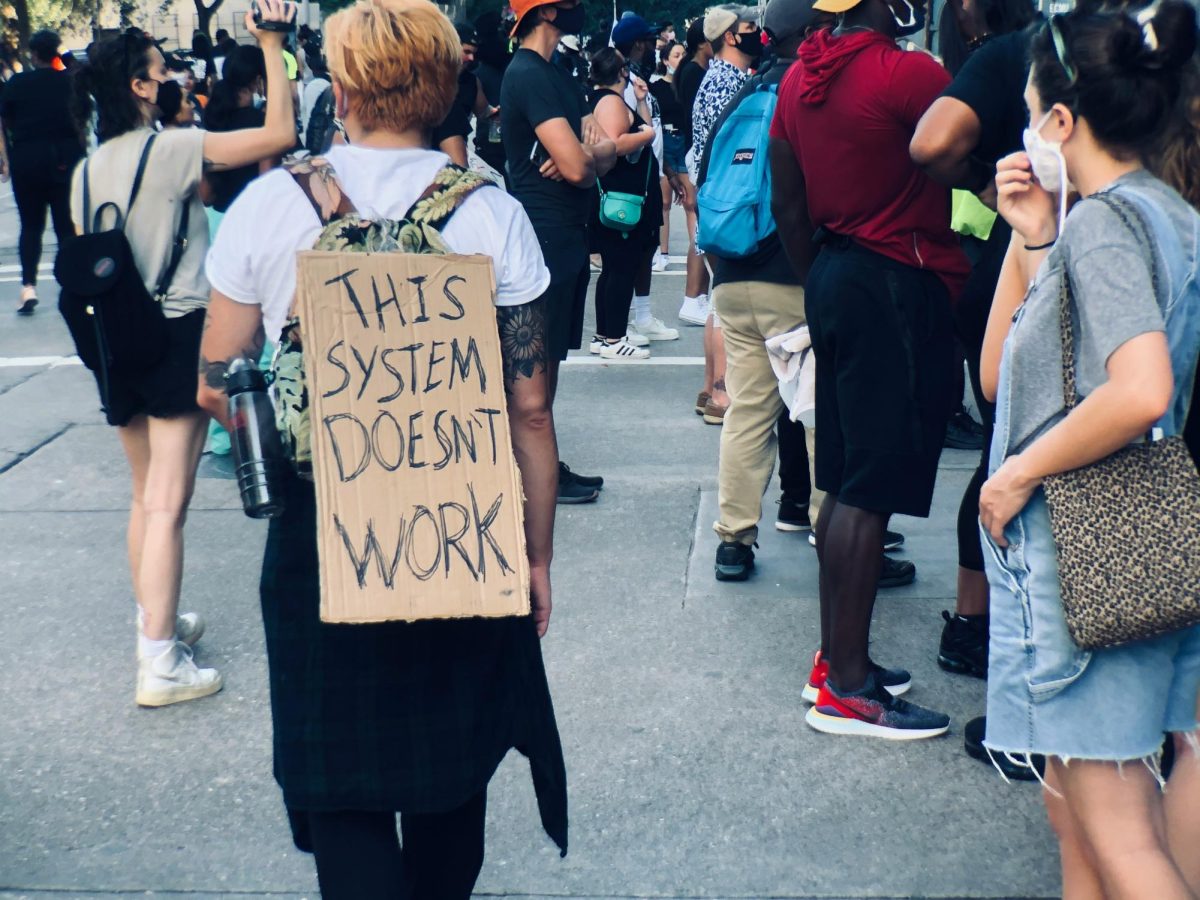
Taken together, these factors illustrate a generation navigating uncertainty with a heightened awareness of its own limits and priorities. Rather than passively accepting the systems they have inherited, Gen Z is actively questioning them, weighing their benefits against their costs and choosing paths that align more closely with their values.
It is not the system that has changed, but the mindset of the new generation. Gen Z is no longer asking how to fit into it — they’re deciding whether it deserves them at all.