


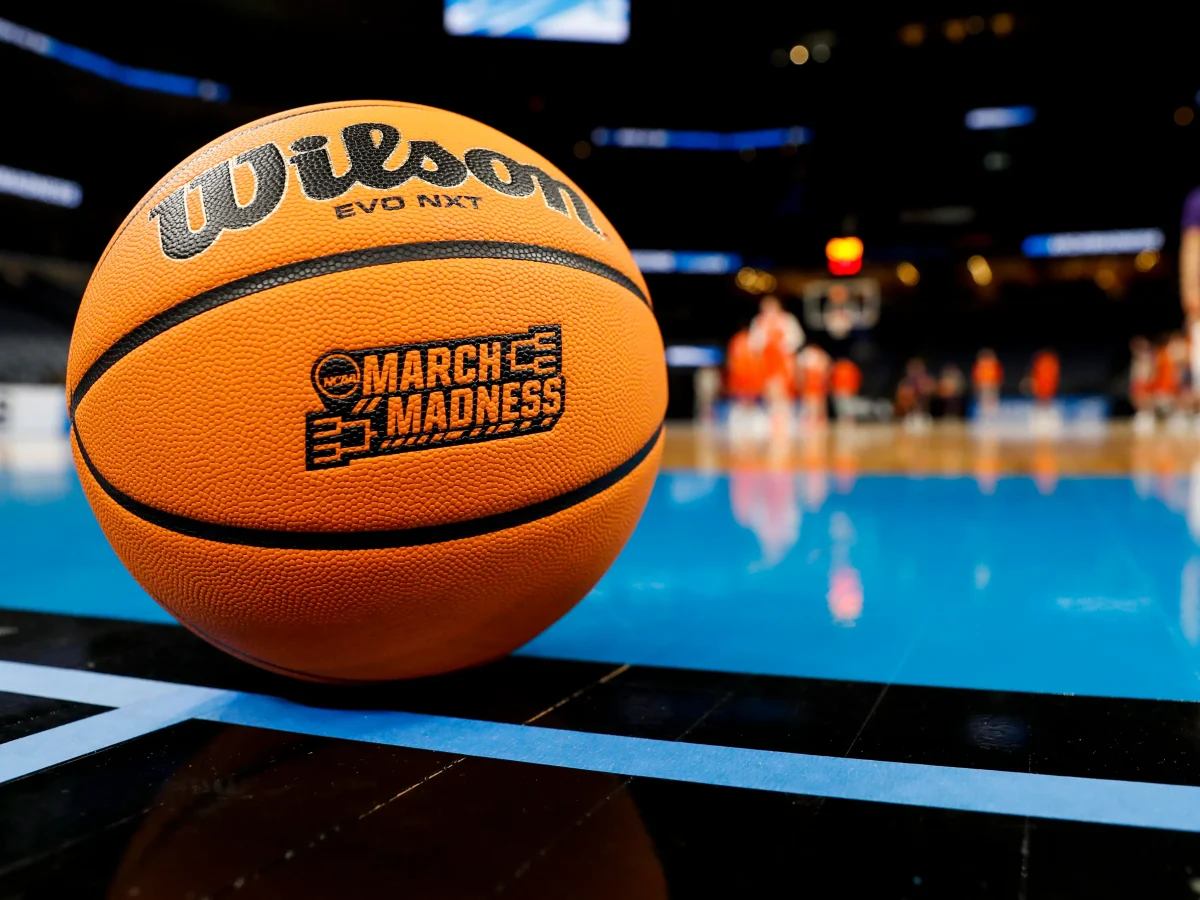
March Madness has reached the point where the good teams are sifted away from the great ones.
With both the men’s and women’s NCAA tournaments narrowed down past the Sweet 16, the intensity, stakes and level of play have all elevated. What began as a field of 68 teams is now a battle among the nation’s best, with every possession carrying the weight of a season.
This year’s Sweet 16 delivered a mix of dominance, close finishes and emerging contenders, setting the stage for a highly competitive run to the finals.
For the men’s tournament, the Sweet 16 largely followed a chalk narrative, with many top-seeded teams advancing — but not without a fight.
Programs like Duke, Arizona and Michigan continued to assert themselves as championship contenders. Duke’s narrow 80-75 win over St. John’s highlighted the Blue Devils’ ability to execute in high-pressure moments, relying on composure and balanced scoring late in the game.
Michigan has also impressed throughout the tournament, combining offensive efficiency with strong rebounding and depth. Arizona, known for its fast-paced offense, has continued to overwhelm opponents with consistent scoring output.
However, the Sweet 16 proved that seeding still leaves room for disruption.
Illinois emerged as one of the biggest winners of the round, knocking off Houston in a game defined by defensive pressure and forced turnovers. Illinois’s ability to control tempo and limit scoring opportunities has positioned the team as a legitimate contender moving forward.
Meanwhile, No. 9 seed Iowa continued its surprising run, advancing deeper into the tournament and reinforcing one of March Madness’ core truths: momentum can outweigh expectations. The Hawkeyes have relied on balanced scoring and second-half adjustments to stay competitive against higher-seeded opponents.
Tennessee also added to the unpredictability with a physical, hard-fought win over Iowa State. In a tournament where games are often decided in the final minutes, Tennessee’s ability to remain composed under pressure proved crucial.
Despite the presence of top seeds, the margin for error has been slim. Many of the Sweet 16 matchups came down to execution in the closing moments, emphasizing how evenly matched the remaining teams are.
The Sweet 16 didn’t just determine winners — it created compelling matchups moving forward.
One of the most anticipated games features Duke and UConn, two programs with strong tournament pedigrees and championship expectations. UConn’s win over Michigan State showcased its defensive discipline and ability to control the pace of the game.
As the men’s tournament progresses, three factors are likely to determine success: defensive consistency, rebounding and late-game decision-making. Teams that can limit mistakes while capitalizing on key moments will have the edge.
On the women’s side, the Sweet 16 showcased both the dominance of top programs and the increasing parity across the sport.
No. 1 seeds continued to lead the way with commanding performances. South Carolina delivered one of the most dominant wins of the round, defeating Oklahoma 94-68 and reinforcing its status as a national title favorite.
UConn also made a strong statement, defeating North Carolina 63-42 behind a defensive effort that limited scoring opportunities and controlled the pace throughout the game.
UCLA continued its impressive run with an 80-56 victory over Minnesota, showcasing both depth and offensive efficiency. Texas advanced with a 76-54 win over Kentucky, using a balanced attack and strong defense.
While top seeds advanced, the round was not without surprises.
Notre Dame pulled off one of the most notable upsets, defeating No. 2 seed Vanderbilt 67-64 in a tightly contested matchup. The win highlighted Notre Dame’s resilience and ability to perform in clutch moments.
Duke also delivered a statement performance, edging LSU 87-85 in one of the most exciting games of the round. The matchup featured high-level scoring and showcased the growing competitiveness across the women’s tournament.
Michigan added to the Big Ten’s strong showing, defeating Louisville 71-52 with a dominant defensive performance.
Beyond the results, the Sweet 16 reflected the continued growth of women’s college basketball.
The gap between top programs and the rest of the field is narrowing, leading to more competitive games and fewer predictable outcomes. Teams across conferences are demonstrating the ability to compete at a high level, contributing to the overall excitement of the tournament.
Star players have also played a major role, delivering standout performances in key moments. Whether through scoring, defense or leadership, individual contributions have shaped the outcomes of several games.
At the same time, team-oriented play has remained essential. Programs that emphasize ball movement, communication and effective shot selection have consistently found success against even the toughest opponents.
While the early rounds of March Madness are known for upsets and unpredictability, the Sweet 16 represents a shift in focus.
By this stage, every remaining team has proven its ability to win under pressure. Games become more strategic, with coaching adjustments and preparation playing a larger role.
The pace often slows, defenses tighten and possessions become more valuable. Execution — especially in the final minutes — can determine whether a team advances or sees its season come to an end.
For players, the pressure intensifies. Each game presents an opportunity to move closer to a championship, but also the risk of elimination. That balance creates the drama that defines March Madness.
As the tournaments move into the Elite Eight, the path to the Final Four becomes clearer but no less challenging.
On the men’s side, top seeds remain in control, but challengers like Illinois and Iowa have shown they are capable of disrupting expectations.
In the women’s tournament, dominant programs like South Carolina, UConn, UCLA and Texas continue to lead the way, while teams like Notre Dame and Duke have proven they can compete at the highest level.
With only a few games separating teams from the Final Four, every possession, every adjustment and every moment matters.
One thing is certain: The madness is far from over.