In academia — and public intellectual discourse, more broadly — the old adage that “sunlight is the greatest disinfectant” has become something of a cliché. It also fails to consider the horrifyingly effective sterilizing properties of nuclear weapons.
Since the first nuke was tested in the New Mexico desert, this newfound capability to practically create sunlight on the face of the Earth has neatly “disinfected” the happenings of institutions and nations.
Each spark leaves a scar of its treatment on the planet — a bleak treatment history.
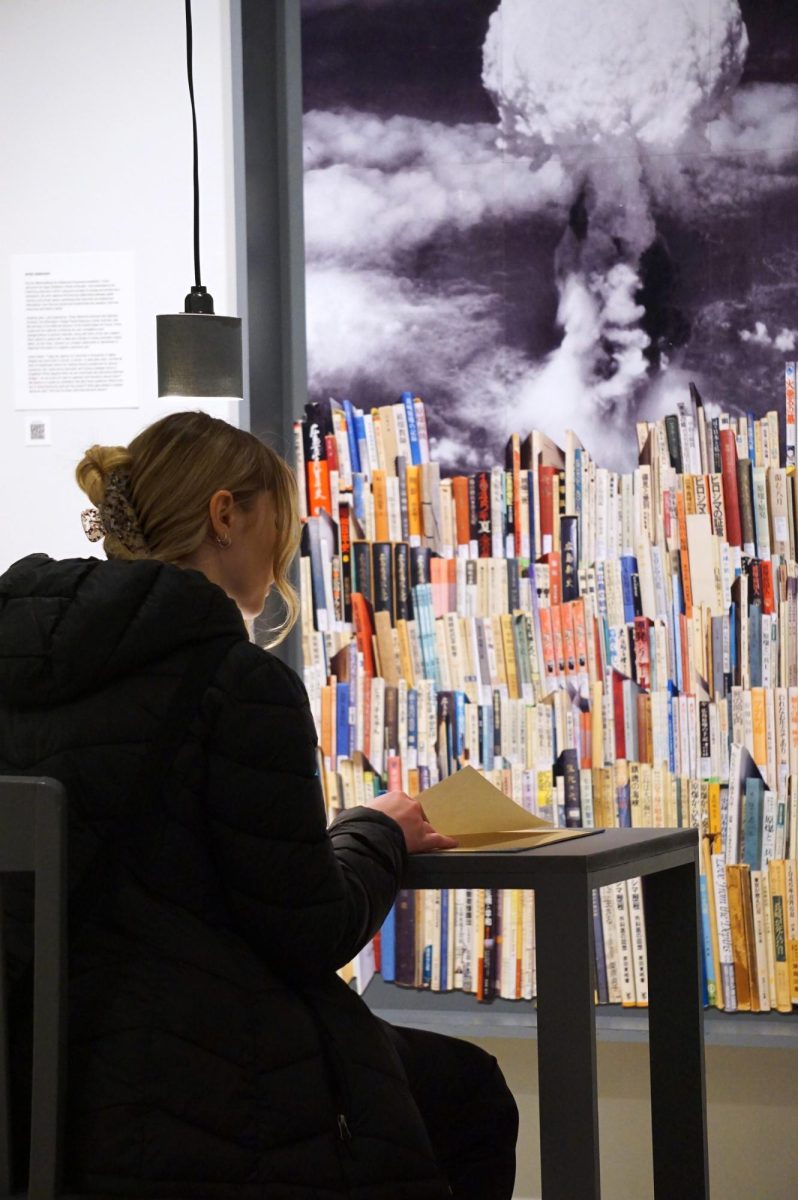
In partnership with the Wilmington College Peace Resource Center (PCR), Oakland University has spotlighted the PCR’s collection of relics from the ruins of post-atom bomb Hiroshima at the Art Gallery in Wilson Hall for some time, proudly upholding this history of dialogue.
On Friday, March 20, the exhibit came to a crescendo with the “Plumbing the Depths of A-Bomb Sufferers’ Trials and Tribulations” Interdisciplinary Symposium. The platform gave experts across many fields an opportunity to discuss some of their work — and how it was affected by the ash phantoms of Hiroshima.
The university offered several of its faculty members for intensive lectures, and also hosted guest speakers. Katy McCormick of Toronto Metropolitan University gave a talk on how trees in the area were affected by the bombs.
She explained that Shinto, the traditional religion of the modern Japanese people, maintains a rather unique tie to nature and life. This grants the trees that survived the bombing an almost shrine-like status as survivors.
A porcelain tile that survived the Hiroshima blast rested 20 feet from where McCormick delivered her lecture — confirming the cultural sense that items that survive such a hellish experience carry a storied soul.
Tanya Maus, director of the Peace Resource Center, later gave a lecture on the intellectual shockwaves and academic ruins left by the bombing.
As sand turned to glass from the heat, the bombings allowed for a broad change in the way human rights were discussed.
Previously in war, death — even on the grandest scale — was uniquely human. The difference in scale is even visible in modern warfare.
Slaughters like those of the Sudanese Civil War leave a blood trail that can be seen from the International Space Station.
But after a strong enough rain, blood washes into the dirt.
A nuclear bomb transforms the very dirt itself into a ghastly footprint of its existence.
Its development elevated weapons of war from the limits of human devices into the very forces of nature, weaponized.
It is not a minor difference.
Firebombs generate temperatures around 2500 Fahrenheit. Atomic detonation, meanwhile, creates a fireball measuring up to 180 million degrees Fahrenheit.
This is destruction on an entirely different scale.
Each of the detonations of the atomic bomb wrought devastation so incredible that, for 80 years, humanity has agreed that it does not need to happen again.
The event concluded with a walkthrough of the event by the curator, Oakland’s own professor Claude Baillargeon. Baillargeon has not only curated the event, but has also been involved in trying to pull the event together for years.
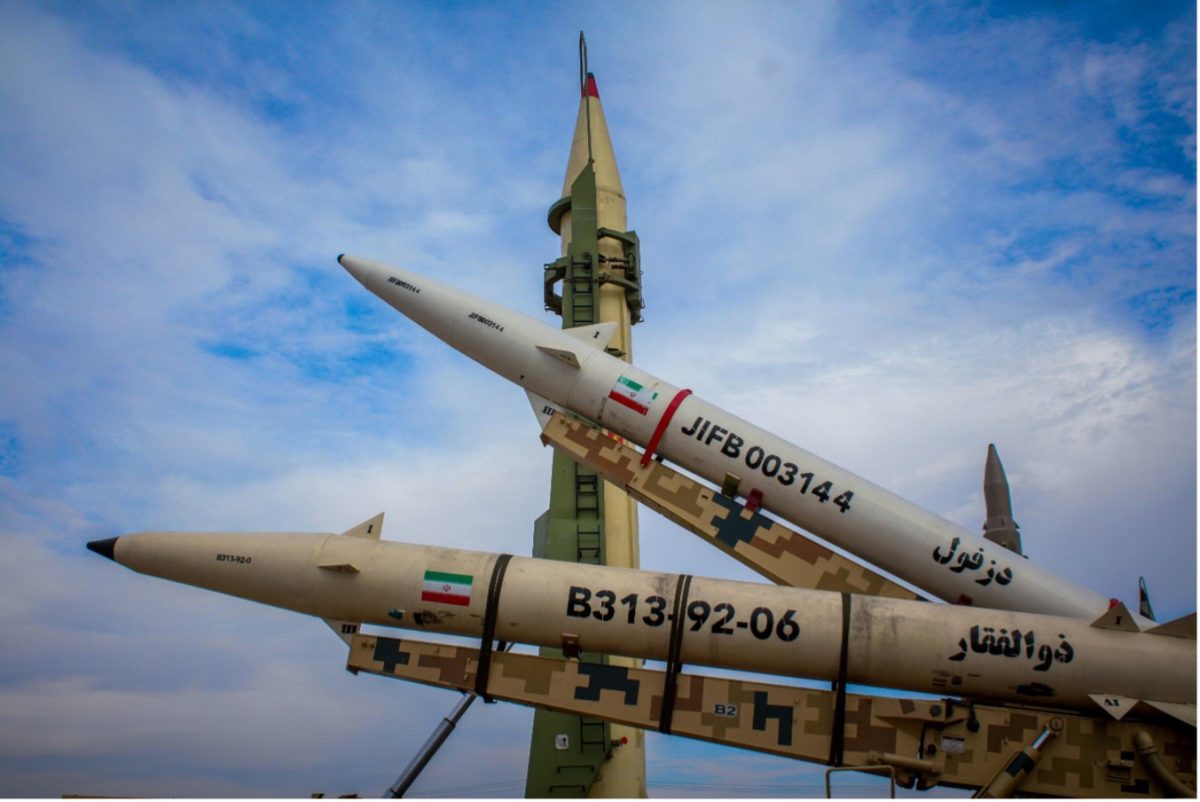
The timing is fortunate. The second hand of the nuclear clock is closer than ever. Geriatric fingers across the globe hover over red buttons.
The exhibit remains open at Wilson Hall through April 5.