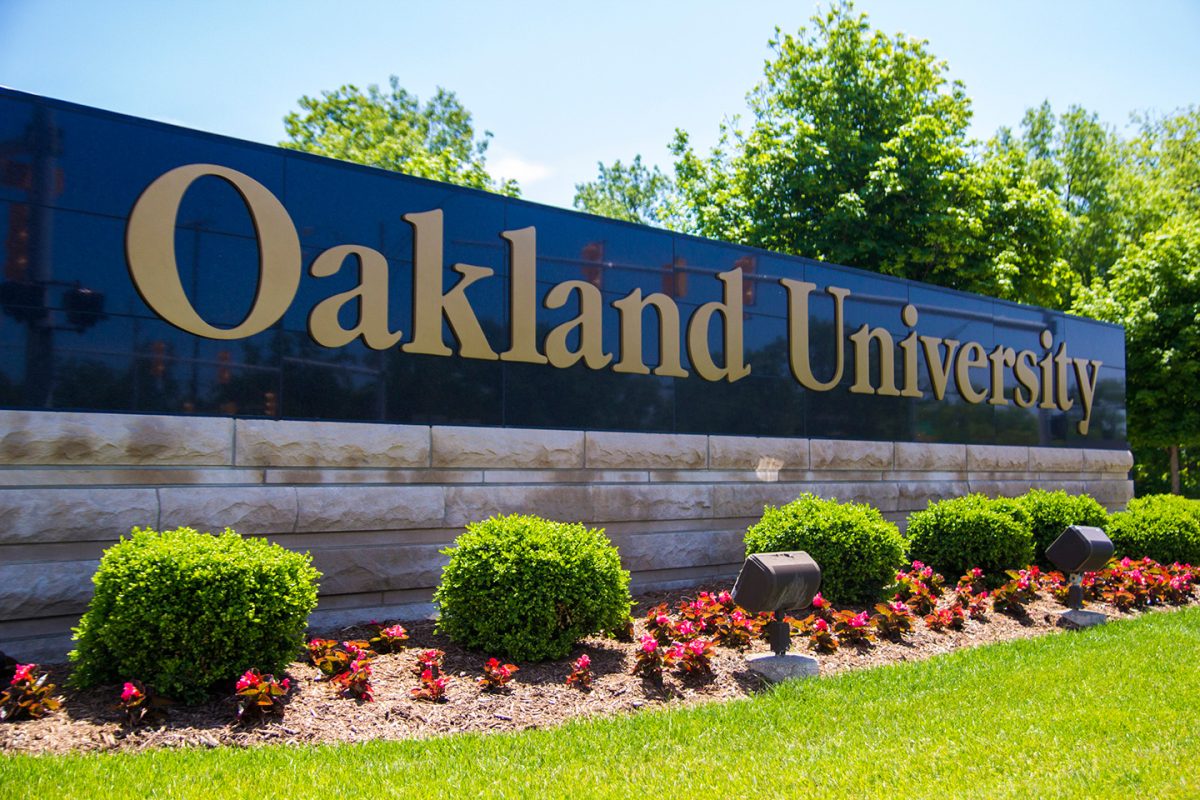
GrizzHacks is a 24-hour hackathon scheduled for March 28-29 in Oakland University’s Engineering Center, organized by OU students. During the event, college students collaborate on projects while building connections with recruiters, sponsors and peers who share interests in information technology, engineering and computer science.
With more than 170 participants last year, organizers expect even greater attendance this weekend. No prior experience is required to participate, making the event accessible to students of varying skill levels. GrizzHacks offers four tracks: artificial intelligence and machine learning, social good, fintech and the secretive “Hell’s Kitchen” track.
Sean Collins, president of GrizzHacks and lead of the logistics team, emphasized that GrizzHacks is not meant to be an intensely competitive environment, nor does it strictly align with common perceptions of “hacking.”
“A lot of it is just about making connections with other people in the field,” Collins said. “It’s about creating a project.”
The artificial intelligence and machine learning track invites participants to explore how algorithms can influence industries, often by applying data to real-world challenges. The social good track focuses on using technology to create positive change, encouraging students to develop solutions that address issues affecting individuals, communities and the environment.
The fintech track blends finance and technology, challenging participants to rethink financial systems and improve accessibility in areas such as digital transactions and banking tools. Meanwhile, the Hell’s Kitchen track remains undisclosed until the event begins, adding an element of surprise for those who choose it.
Collins said the Hell’s Kitchen track will likely be the most challenging. Participants who select it will not receive details in advance, instead discovering the theme only after arriving at the event.
Seven sponsors are supporting the event this year, including OU Credit Union, 365 Retail Markets, 24G, the OU School of Engineering and Computer Science, Free Wili, the OU Donna and Walt Young Honors College and Light Guide Systems. Representatives from these organizations will attend to connect with participants and identify potential talent.
Sponsors also play a role in shaping the event’s tracks. For example, the company backing the Hell’s Kitchen track helped determine its focus, contributing to the mystery surrounding it.
Students have considerable flexibility in how they approach the hackathon. Participants can form teams of up to four people and choose the track that best fits their interests. While teams may discuss ideas and plan ahead, Collins noted that all coding and project development must begin at noon on the day of the event.
In previous years, some participants have strategically selected tracks with fewer competitors to increase their chances of winning prizes. However, organizers continue to stress that the primary goal is collaboration and learning rather than competition.
Additional information about GrizzHacks is available on its website and Instagram page. The event is scheduled to begin at 10 a.m. March 28 and conclude at 3 p.m. March 29.
As students work together throughout the 24-hour period, they not only develop technical skills but also build relationships within their academic and professional communities. To many students, the sense of connection and shared purpose, Collins said, often becomes one of the most valuable aspects of the experience.
“It’s a nice feeling of optimism with all the people there,” Collins said. “Everyone seems very excited.”