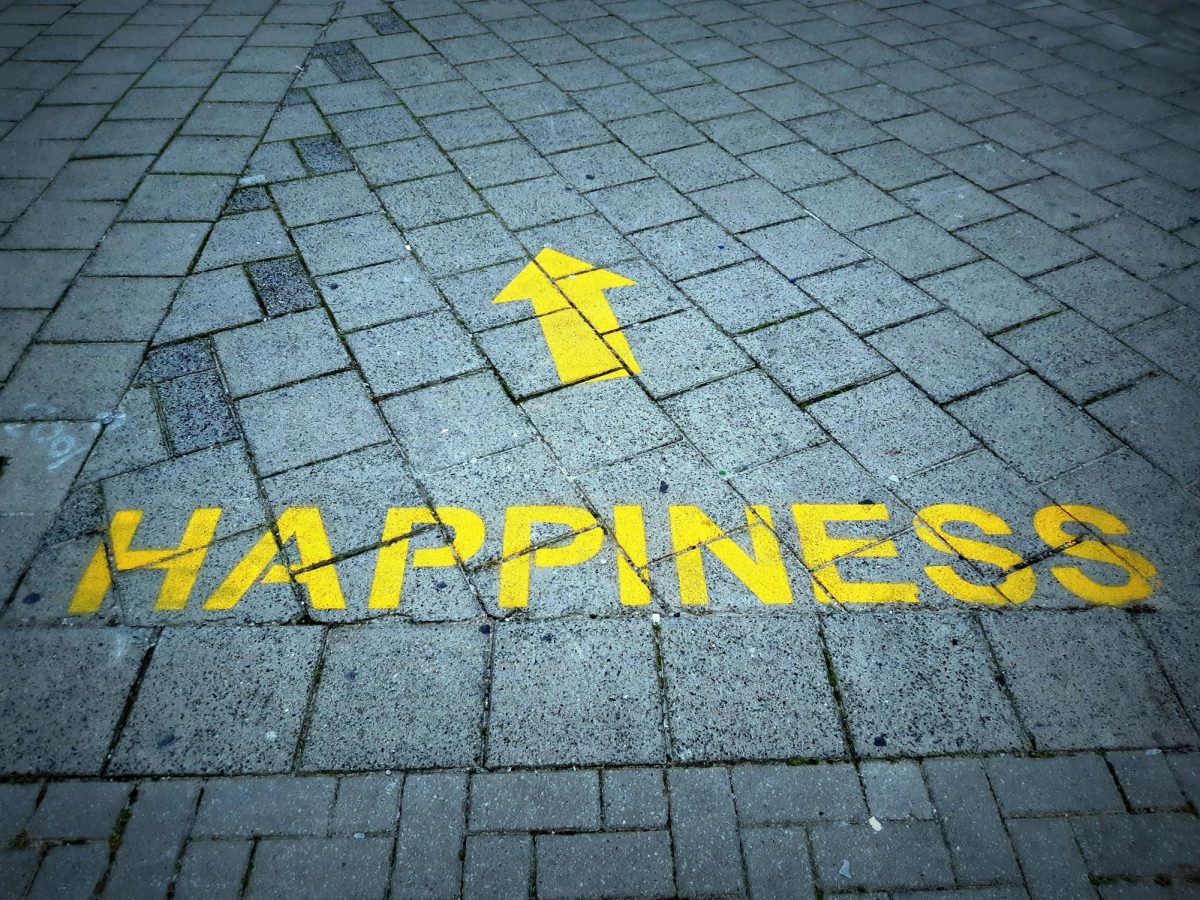
Happiness is defined as “a state of well-being and contentment.” It is a feeling we often chase. It is as if we think that by obtaining happiness, our lives will be much better, not always realizing that we must go through struggles to achieve that short-term feeling.
It is common to get caught up in the chase, not feeling any contentment until you reach your end goal, causing you to fly past all the little joyful things in life along the way.
“Significant research suggests that our cultural obsession with happiness could be making us miserable,” Mark Lipton, PhD, said in an article in Psychology Today.
Instead of wishing for a feeling that you think you need to work for, simply let it happen. Happiness does not need to stem from getting what you want when you want it or achieving some big goal. Real happiness is often felt through the small things you may not even realize.
Lipton expands on the concept of “happiness capitalism,” also referred to as the happiness marketplace, where individuals assume that happiness “can be bought, leased (a Beemer or a Benz), swiped (Tinder, Bumble), or achieved with life hacks.”
There is difficulty in identifying the problem behind this, as all of these things can, to a certain extent, lead to an approximation of happiness. However, this feeling wears off and is not long-term. When we are consumed by the idea that materialistic or temporary experiences will bring us the joy we need, we tend to feel intense negative emotions as they come to an end.
“Those who focus purely on happiness often end up feeling lonelier and less satisfied,” Lipton said.
“According to the researchers, it’s OK to aspire to be happy, but where people run into trouble is when they become concerned about happiness,” Mike Travers said in an article in Forbes.
The article examined a study conducted by a team of psychologists led by Felecia Zerwas of the University of California, Berkeley. Surprisingly, researchers observed that people who overemphasize the value of happiness are less likely to be happy, both in the short and long term.
“These people become so preoccupied with their quest for happiness that it leads to disappointment, regret, FOMO, and a host of other negative emotions,” Travers said.
The difference between aspiring to be happy and becoming concerned about happiness is significant, and is discussed further in another Forbes article by Mark Travers. Those who aspire to be happy see the feeling as a goal to strive toward. When people become concerned about happiness, however, they begin to question how happy they truly are, making the concept seem distantly unattainable.
Zerwas believes there are two elements of happiness. The first is “the strategies that an individual uses to pursue happiness,” and the second is “the extent to which an individual feels badly about their emotions while pursuing happiness.”
Rather than adopting an unhealthy fixation on indicators and symbols, it is important to find the things in life that make you genuinely happy. By pursuing these things, you are more likely to experience the feeling everyone strives for. Instead of putting yourself down while pushing toward your goal of happiness, use those emotions to influence how you continue to live your life.