


As the Detroit Lions seek to bounce back from a disappointing 2025 campaign, free agency is perhaps the most complete opportunity for retooling the roster. Players leave and players join, but the goal is to fill holes, leave better than one came in and be in position to draft the best players available in the NFL Draft.
Some former Lions parted ways with the franchise.
Tackle Taylor Decker requested and was granted his release after a contract disagreement, offensive guard Graham Glasgow was released and running back David Montgomery was traded away. Linebacker Alex Anzalone, cornerback Amik Robertson, defensive end Al‑Quadin Muhammad, defensive tackle Roy Lopez and wide receiver Kalif Raymond all signed elsewhere as free agents.
Detroit was able to bring back some of its own in free agency: linebackers Malcolm Rodriguez and Trevor Nowaske, cornerback Rock Ya‑Sin and wide receiver Tom Kennedy were all retained. Quarterback Teddy Bridgewater is also returning to Detroit after a one‑year stint in Tampa Bay.
The most exciting part of NFL free agency is, of course, the fresh faces.
Many Lions fans hoped that Detroit would be aggressive in bringing in elite talent to maximize their current crop of superstars. This approach, however, might risk their ability to make future investments.
General Manager Brad Holmes opted to “stay the course” and refrain from bringing in stars, instead largely filling holes with low‑risk, prove‑it deals.
The names aren’t the flashiest, but they should be meaningful contributors for the 2026 season:
Cade Mays, center
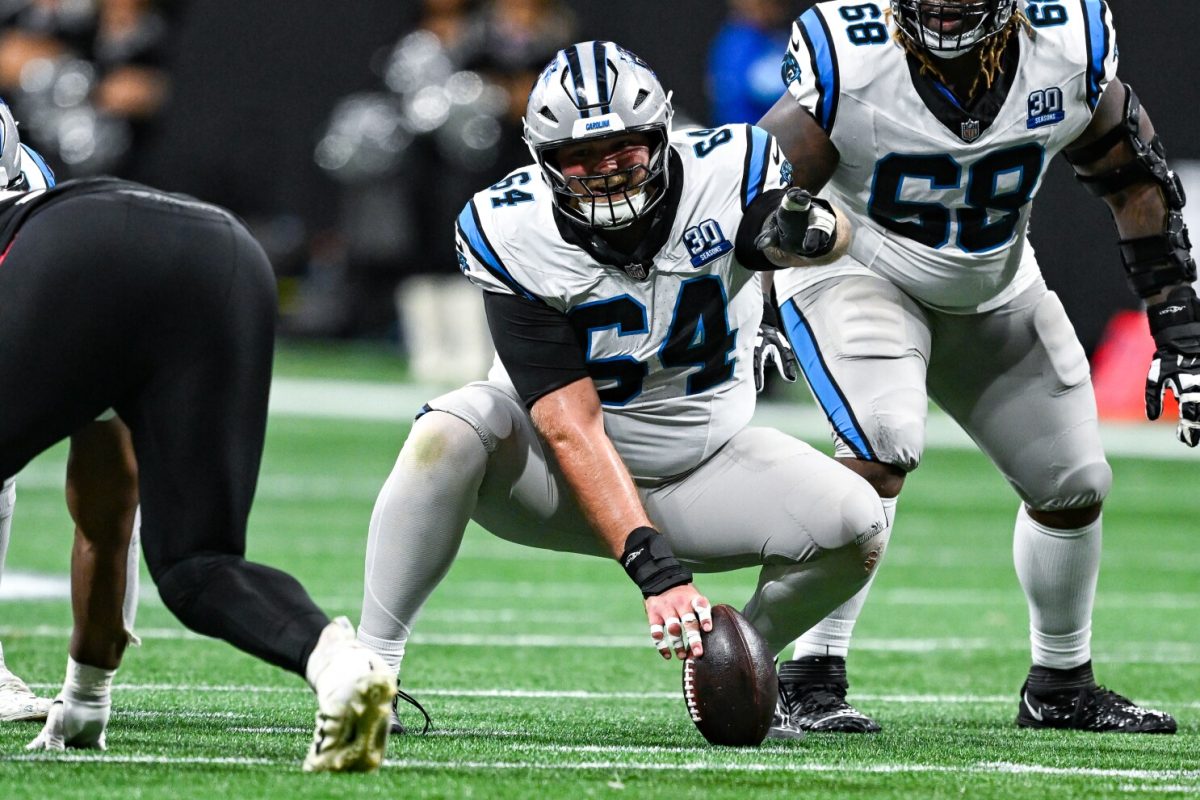
Cade Mays was both the biggest — in terms of length, financial commitment and projected impact — and the first signing of the week for Detroit. The Lions signed the former Panther to a three‑year, $25 million contract with the intention of him starting in the middle of their offensive line for the foreseeable future.
Mays is a 26‑year‑old ascending player who brings starting experience, versatility and stability to Detroit’s line. He properly earned the starting job in Carolina and didn’t allow a sack in 12 games as a starter in 2025.
This move comes at great value, as Mays is almost surely an upgrade at center and probably the second‑best player available at the position in this year’s free‑agency class, behind only Tyler Linderbaum, who signed for over three times the amount.
Larry Borom, tackle
The Lions were left with a gaping hole at tackle after veterans Decker and Dan Skipper requested release and retired, respectively. Borom is a one‑year, $5 million part of that solution.
The Detroit native and former Bear and Dolphin is 26 years old and possesses ideal size at 6‑foot‑5, 325 pounds. Borom started 11 games for the Dolphins in 2025 and has proved solid — but not dominant — in both pass‑ and run‑blocking assignments.
If Detroit doesn’t make further investments at tackle, Borom will likely start at right tackle while Penei Sewell moves to the left side. In that case, Borom would likely be a significant downgrade from Decker. If the Lions do bring in a starter — whether through the draft, a trade or free agency (including the still‑available Decker) — Borom would be a huge upgrade over Skipper as the swing tackle.
Isiah Pacheco, running back
After trading Montgomery to the Texans for a pair of draft picks and Juice Scruggs — a potential starter at offensive guard — the Lions were left with a running back room that was essentially barren apart from superstar Jahmyr Gibbs. Isiah Pacheco comes to Detroit on a one‑year, $1.8 million deal as the Lions’ RB2.
He’s two years removed from being one of the most physically dominant and violent runners in the NFL. Over the past two seasons, the former Chief has battled injuries and struggled to produce. Despite his recent regression, Pacheco brings Super Bowl experience and the possibility of a return to his former dominance.
If the 27‑year‑old can get his explosiveness back, the Lions could be right back to having one of the NFL’s premier running back duos. If not, Pacheco still brings the downhill physicality that complements Gibbs’ playstyle and the experience to carry a workload when called upon.
Christian Izien, safety
Always in need of secondary depth — and with their superstar safety duo having injury complications — the first player the Lions turned to was Christian Izien, an instinctive defensive back who battled from undrafted free agent to meaningful contributor for the Buccaneers.
Izien is still just 25, and he brings physical tackling, solid coverage and alignment versatility to a Lions secondary that never seems to have enough bodies.
On a one‑year, low‑cost deal, Izien has a strong chance of impressing fans and earning his keep. Don’t be surprised if his playstyle and tenacity draw him comparisons to a value version of Brian Branch.
Tyler Conklin, tight end
While the Lions’ need at tight end wasn’t as obvious as the other positions they’ve addressed so far, adding Tyler Conklin provides a boost of stability for Detroit’s offense. After Sam LaPorta and Brock Wright, the Lions had close to zero production from their tight end room in 2025. Both players missed time with injury, proving just how much the Lions needed more depth at the position.
Conklin, another Michigan native, is 30 years old and coming off a smaller role in Los Angeles with the Chargers, but he has produced tape that shows talent and dependability, especially in three seasons with the Jets.
The Lions are expected to run lots of multiple‑tight‑end schemes in 2026 under new offensive coordinator Drew Petzing, and Conklin becomes their second‑best receiving option at the position. When healthy, the trio of LaPorta, Conklin and Wright will provide Petzing with flexibility to establish the ground game and create a formidable passing attack in heavy sets.
Roger McCreary, cornerback
Cornerback was a weakness for the Lions in 2025, and Roger McCreary is a high‑upside pickup that should raise both the floor and the ceiling of the group’s production in 2026.
McCreary just turned 26, and he’s started 38 games in the NFL, with most of his production coming from his time with the Tennessee Titans. He’s a do‑it‑all corner who has had success both inside and outside.
His blend of coverage and tackling ability should make him the leader in the clubhouse to start at nickel in 2026, and the Lions’ cornerback room has a chance to be the most complete it’s been in recent memory if McCreary and veteran D.J. Reed both play as well as they’ve proven they’re capable of.
In all, Detroit’s start to free‑agency approach wasn’t about headline splashes — it was about stability, depth and long‑term flexibility.
The Lions filled some key gaps, added competition across the roster and positioned themselves to attack the draft with minimal desperation.
Whether these moves are enough to spark a true bounce‑back season remains to be seen, but Detroit enters 2026 with a clearer foundation and a roster better equipped to support its core stars long term.