Black History Month is a great time to check out films that celebrate Black stories and talent. These movies show determination, courage, and teamwork, whether it’s fighting for justice or taking on impossible challenges. They highlight people making a difference and remind us why these stories matter.
“Just Mercy ” (2019)
“Just Mercy” is a dramatized film based on the true story of civil rights attorney Bryan Stevenson (Michael B. Jordan) and his early work challenging racial injustice in Alabama during the 1980s. The film focuses on one of Stevenson’s first major cases, Walter McMillian (Jamie Foxx), a Black man wrongfully convicted of murder.
After law school, Stevenson moved to Alabama with the goal of helping people on death row who often do not have the resources or support needed to properly defend themselves in court. He begins this work with the help of Eva Ansley (Brie Larson), who works alongside him as they start building a legal organization focused on justice and fairness.
As Stevenson begins looking into McMillian’s case, he starts to notice how complex the legal process can be, especially when bias and pressure from the community are involved.
The film follows Stevenson as he speaks with McMillian, meets with families, and reviews evidence to better understand the case. It also shows the emotional weight carried by everyone involved, especially the families and the people supporting them.
Throughout the story, the film highlights how difficult it can be to challenge decisions that have already been made within the legal system.
“Just Mercy” focuses on issues of justice, inequality, and the experiences of Black individuals within the legal system. It also highlights the work of a Black attorney who chose to dedicate his career to helping others and advocating for fairness.
The film shows the determination it takes to keep pushing forward even when progress feels slow, and it tells a meaningful story about standing up for what is right.
“Black Panther” (2018)
Marvel’s superhero Black Panther made his first appearance in the Marvel Cinematic Universe in the 2016 film “Captain America: Civil War” and received his own feature film just two years later.
The character Black Panther originated in a “Fantastic Four” comic in 1966 and became a member of the Avengers in 1968, the first Black superhero to join the comic series.
The film follows T’Challa (Chadwick Boseman), the king of the fictional African country Wakanda, a high-tech, advanced society that makes a living off mining the valuable metal vibranium. T’Challa must take up the mantle of the Black Panther after the death of his father in “Captain America: Civil War,” eating the Wakandan heart-shaped herb that imbues him with superhuman strength, speed and agility.
Historically, Wakanda has been largely isolated, hiding behind the guise of a third-world country in order to avoid meddling from larger world powers that wish to control the vibranium industry.
A challenger to the country’s stability arises in the form of N’Jadaka (Michael B. Jordan), an American with Wakandan heritage who wants to claim the throne and take control of Wakanda’s immense military powers.
T’Challa must confront this figure from his past as well as face the responsibility of holding great power, while balancing the duty he owes to both his countrymen and his fellow Africans.
The film stands out not just as one of the few superhero movies with Black superheroes, but also because it forgoes stereotypes and represents T’Challa as a leader who stands in the light, celebrating his heritage and culture.
“The Six Triple Eight” (2024)
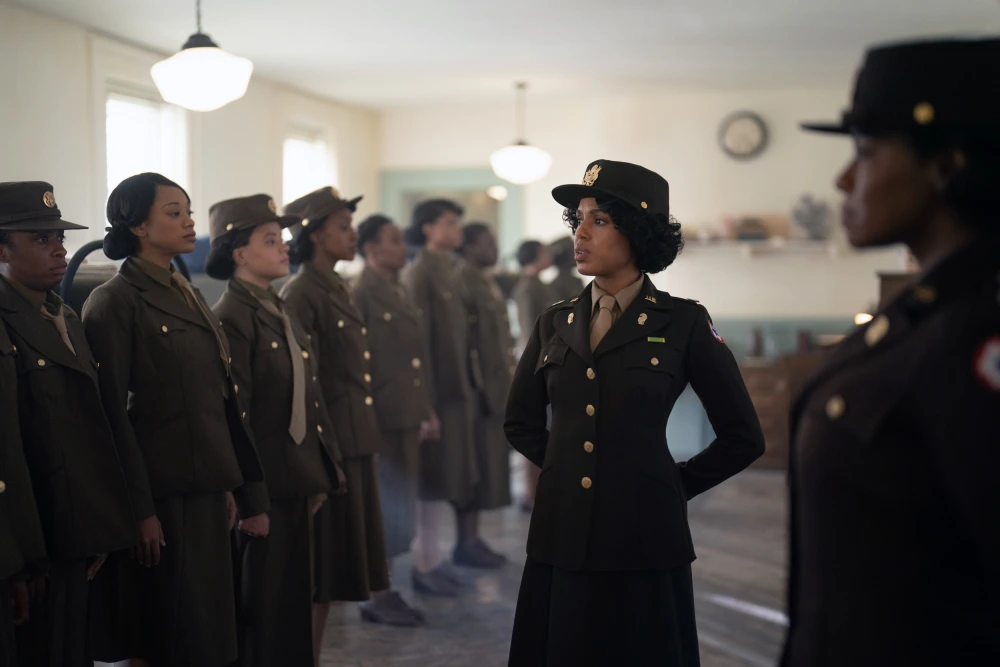
“The Six Triple Eight” is a dramatized film based on the true story of the 6888th Central Postal Directory Battalion, the only all-Black and all-female battalion to serve overseas during World War II.
The film follows the battalion as they are sent to Europe with an unbelievable task of sorting through massive amounts of undelivered mail meant for American soldiers.
The film centers on Lena Derriecott Bell King (Ebony Obsidian) and several other young Black women in the battalion, guided by Major Charity Adams (Kerry Washington), as they face challenges when they arrive overseas.
From the beginning, the women deal with racism, sexism, and pressure from military leadership while trying to prove they are capable of completing the mission they were given. Despite this, the battalion remains determined to support the soldiers waiting to hear from their families.
As the women begin their work, the film shows the scale of the task and how important the mail is for the soldiers. Letters connect soldiers to their families and give them emotional support, reminding them of home and what they are fighting for. The film highlights the teamwork and organization required to take on a job that many believed was impossible.
Throughout the film, the women support one another while pushing forward under difficult conditions. Their dedication and effort slowly begin to change the way others view them and the role they play in the military.
The film shows the contributions of Black women during World War II and recognizes the determination and strength it took for them to succeed in a space where they were often overlooked. The story adds another perspective to Black history and honors the impact this battalion had during the war.
“Spiderman: Into the Spiderverse” (2018)
While this may seem like yet another of countless Spiderman iterations, Sony’s animated version is starkly different. Instead of Peter Parker, viewers are introduced to Miles Morales, unique for his Puerto Rican and African-American heritage.
The film also boasts impressive animation, blending art styles to create unique looks for each character in a way that seems like a comic book brought to life. Fun style choices such as speech bubbles and onomatopoeia appearing onscreen immerse the audience in the experience.
Miles Morales faces up against the Kingpin, who is trying to activate a collider that would allow teleportation across the multiverse but would also destroy Morales’ world.
While the Kingpin’s first attempt is abortive, it opens tears in the multiverse that draw spider folk from other universes into Miles Morales’ world. Each of the spider superheroes is animated in a distinct style, such as Peni Parker, who is an anime character.
Miles Morales is unique among the various Spiderman iterations not just because of a slightly different arsenal of superhero powers but also because his family is still alive. Unlike the typical orphaned Peter Parker, Morales has the support and guidance of his father, Jefferson, a police officer, and his mother, Rio.
While Peter Parker is known for his scientific genius, Miles Morales leans towards the arts and is frequently shown embracing his creative side. Throughout the film, Miles must learn not only how to balance his superhero/high schooler identity split but also the struggle to reconcile his biracial identity and the pressures of living up to the name of Spiderman.
The film stars Shameik Moore as Miles Morales, Hailee Steinfeld as Spider Gwen, Chris Pine as Peter Parker and Nicholas Cage as Spider Noir.