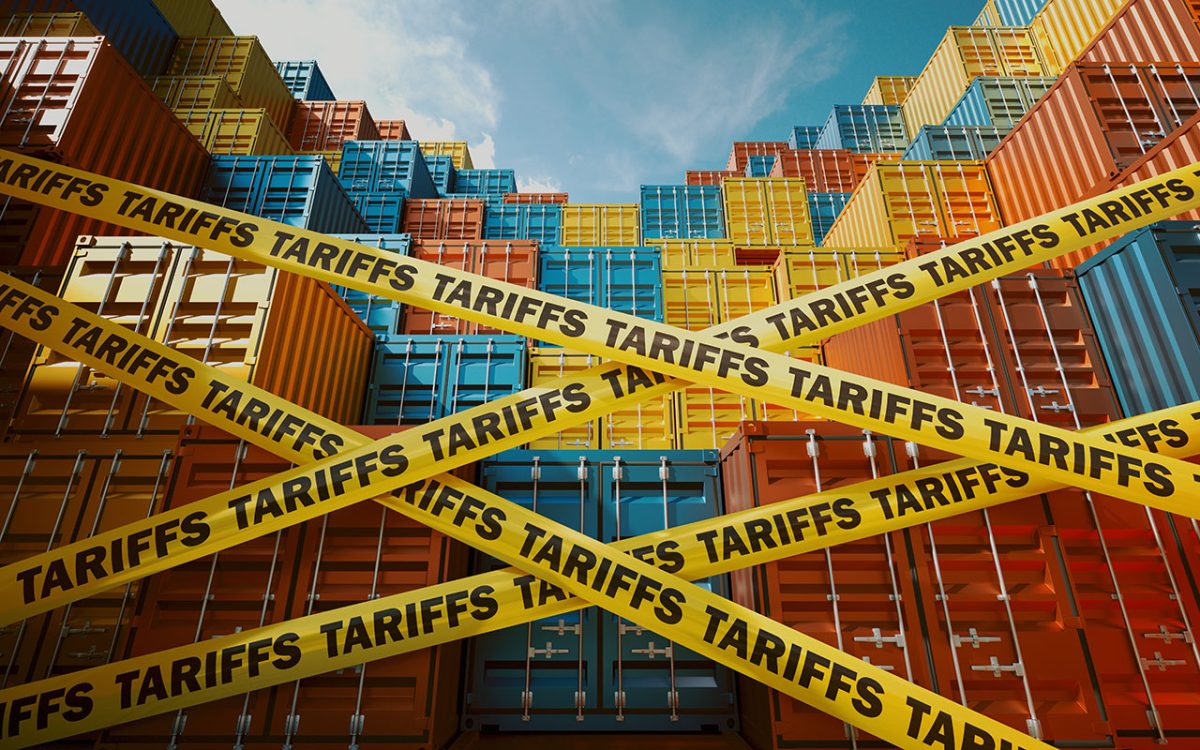
Due to recent international tensions, U.S. tariffs on imported goods might be rising even more than recent rates.
President Trump famously first raised the tariffs on international imports during the beginning of his second presidency in August of 2025. Since then, various deals have been reached with some European countries in order to come to a manageable tariff accord.
We, as consumers, have seen the equivalent of these tariffs on prices shooting sky high for products such as our daily coffee, motor parts and vehicles, retail items and certain grocery item staples.
As of late, different international affairs regarding the U.S. sights settling on trying to acquire the Nordic island of Greenland, have pushed for more pressures on behalf of the Trump Administration to get the Danish government and its European allies to fold.
Separate leaders of the nations that have stood for Denmark the most have verbalized their lack of fear of tariffs and their continued support. Among these happen to be President Emmanuel Macron of France, English Prime Minister Keir Starmer and the European Parliament have famously voiced their standings.
The European Parliament has expressed their condemnation for the recent statements President Trump has made in regard to various different European countries. Even going so far as judging and ridiculing the efforts that some NATO countries spent for the war in Afghanistan.
With the public views of allying with Denmark, many separate countries have now exposed themselves to the wrath of the American tariffs. Countries such as Germany, Iceland, Norway, Sweden and the Netherlands would fall under scrupulous detection and risk.
The reason as to why raising the tariffs anymore is precarious is seen by what they have done so far in the domestic and international markets between the European continent and its cross-Atlantic ally.
The 15% roof on most US-EU trades that was negotiated halfway through 2025 leaves the EU economy to fundamentally rebalance itself, leading to many European leaders and economists discerning pessimistic thoughts about future trading ideals.
Now, a year later, the issue remains, it is only covered up by a new international design. The targeted countries have called out President Trump for his manner of “undermining transatlantic relations and risking a dangerous downward spiral.”
Even with countermeasures being placed or offered, the act of tariff stacking for not receiving one’s way has placed President Trump in an incredibly negative light with the European public, and now its heads of state.
This past Saturday, European leaders met to properly address how Europe could start depending less on the U.S. after President Trump’s remarks have rendered the relationships so tense and uncooperative.
“The past few weeks have made it painfully clear that the European Union often drifts on waves created by others, that we are too dependent on factors beyond our control and have not built on our strengths enough,” Prime Minister of Belgium, Bart De Wever, said during a meeting in Brussels.
Even Giorgia Meloni, the Italian Premier, who holds her country’s friendship with the U.S. as one of the utmost importance, wanted President Trump for his tariff threats. Meloni remarked that though they had good relations, “friendship requires respect.”