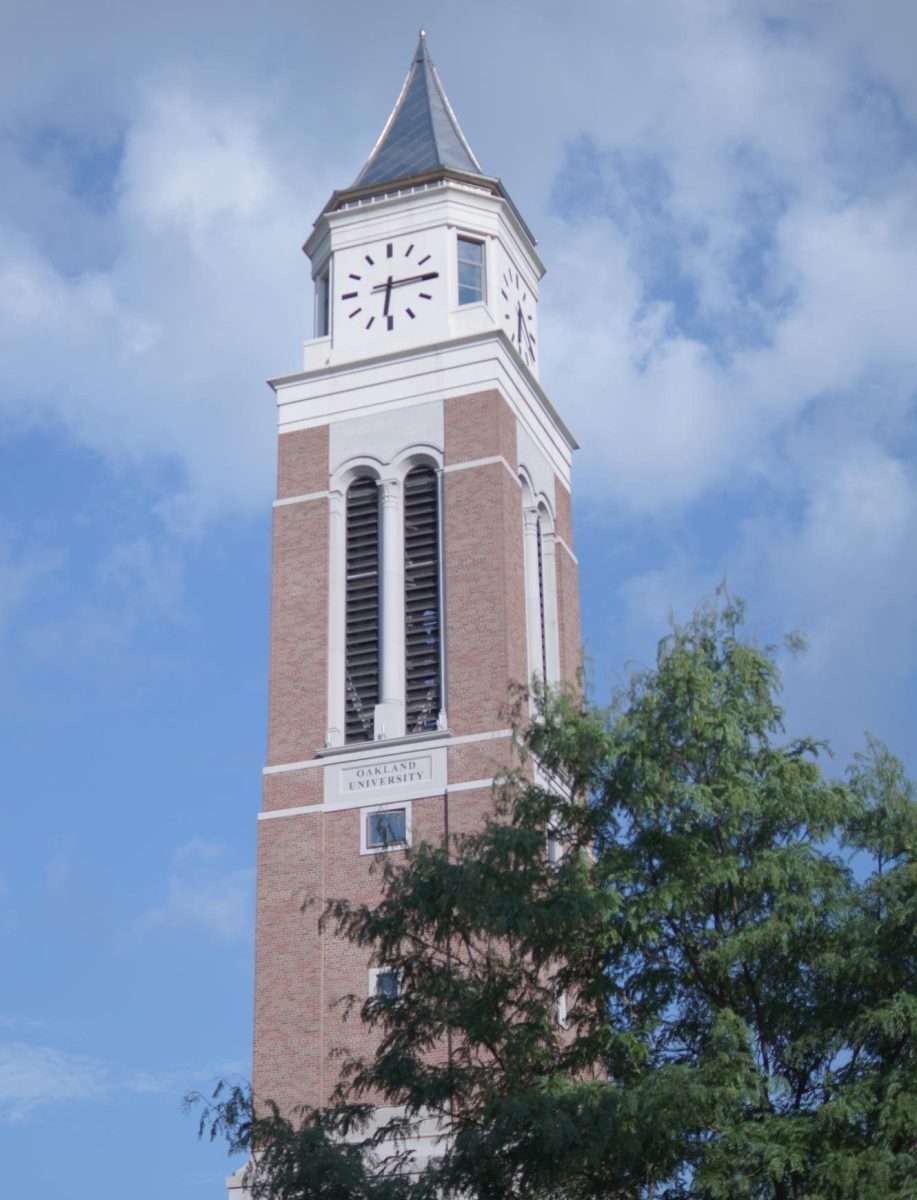
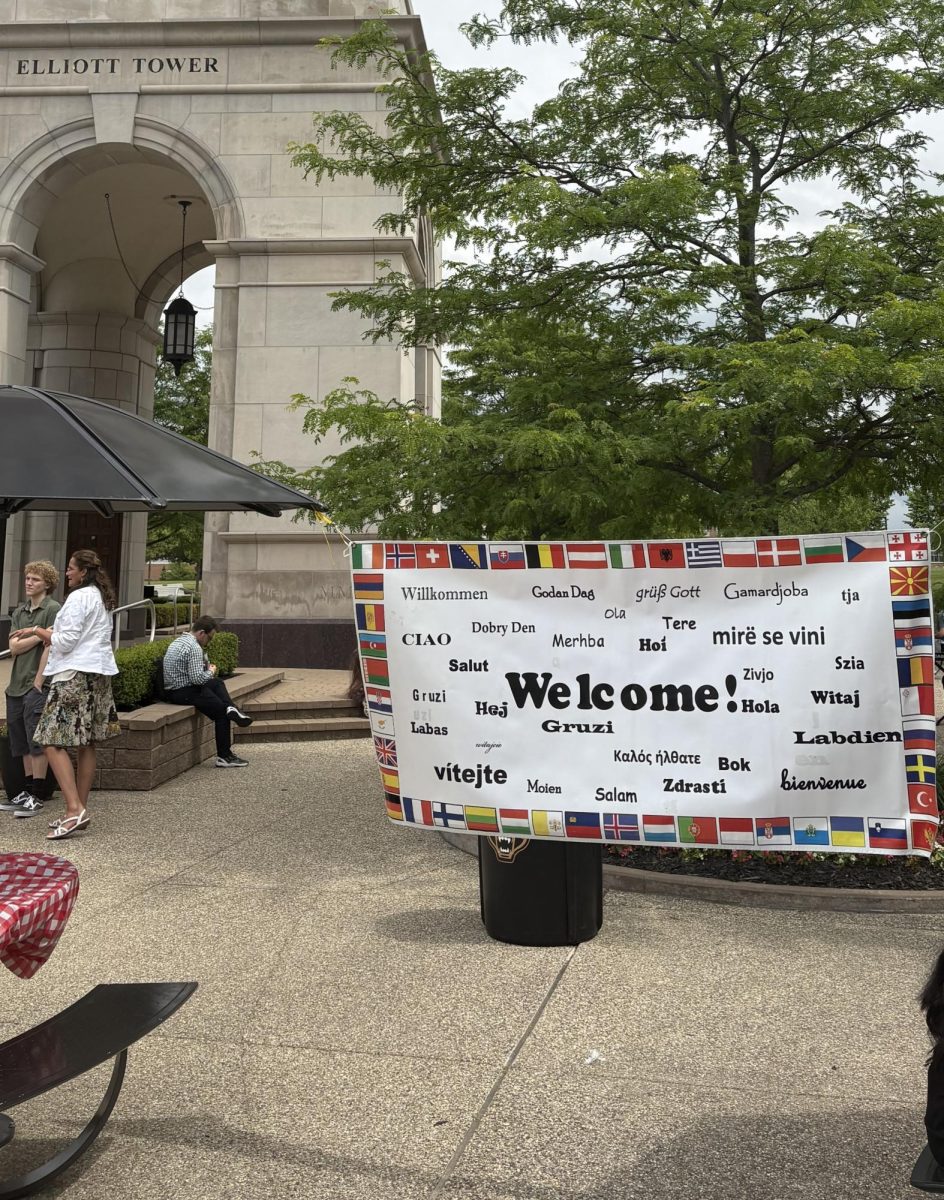
Dancing spreads the groups together like a benign virus. Music drifts through Elliott Hall with the easy confidence of a sweet little lie. The smell of food — nostalgic, inviting, and unfamiliar to many — hangs in the air. Big smiles, and the lively, woody ginger of the oud and an abundance of excellent designer clothes fill the room.
The ancient stone streets of Petra remain an ocean away in Jordan. The same cannot be said of world-famous Levantine chic, nor of the Middle East’s unrivaled hospitality. At Oakland University, the Jordanian Student Association strives to bring the warmth and “good vibes” of home to campus with its Sahrah night.
“That’s honestly the main reason [for organizing the event],” Joseph Hadad, co-president of the Jordanian Student Association, said. “We love it when other people enjoy our events and our culture. We love seeing them experience it — and come to understand us.”
Hadad’s wide smile, gracious movements, and the small army of people eager to greet him signify that the evening provides a key opportunity for Jordanian cultural expression on campus.
“I feel like we don’t have enough big spaces,” Rama Alhyari, the association’s other co-president, said. “As you can see, we’re doing a dance party here.”
Sahrah is the Jordanian equivalent of “grabbing a cold one with the boys” — except alcohol is almost never involved. Instead, drinks include premium tea and coffee. Rather than devolving into Mario Kart after food and board games, the night escalates into dancing and loud jokes.
The capacity of the small classroom in Elliott Hall is well past its limit. Every wall is obscured by a different group of friends, all dancing to music pulled from across the Middle East.
Given the specificity of the association’s name, one might expect a more culturally insular group.
This assumption would be incorrect.
“We do not limit it to our Jordanian stuff,” Hadad said. “People are coming from different cultures. We like to give them a chance to showcase their culture at the same time.”
The hypnotic, percussive trance of Iraqi dance music fills the air one moment — music that freezes the mind while keeping the body alive in motion. Kurdish music sweeps in happily after, the energy opening into clear, communal line dances.
Line dances are recognized by some social anthropologists as a cross-cultural communication method — one where dopamine levels run high and social barriers fall fast.
Ultimately, this cross-cultural joy seems to be the most important thing to the JSA at OU. It is not about who is in the club. The world is a club; what matters is who wants to join the table.
The club does not limit itself to occasional dance parties, however.
In the coming months, the association plans to share the warmth and hospitality of Jordan to such an extent that even King Abdullah II might feel some pressure to step up his game.
An iftar is planned for March. Iftar is the breaking of a day’s fast during Ramadan, typically shared with close friends and family. At this iftar, however, all are welcome — to embrace the culture, the conversation, and the food.
The club is especially excited for A Night in Jordan in April, an ambitious event designed to allow attendees to hear, if only briefly, what their heels might sound like against the ancient bricks of Petra.
The association also calls for more collaboration between student cultural organizations. More people at the table means a bigger, happier party.
The world should take notes.