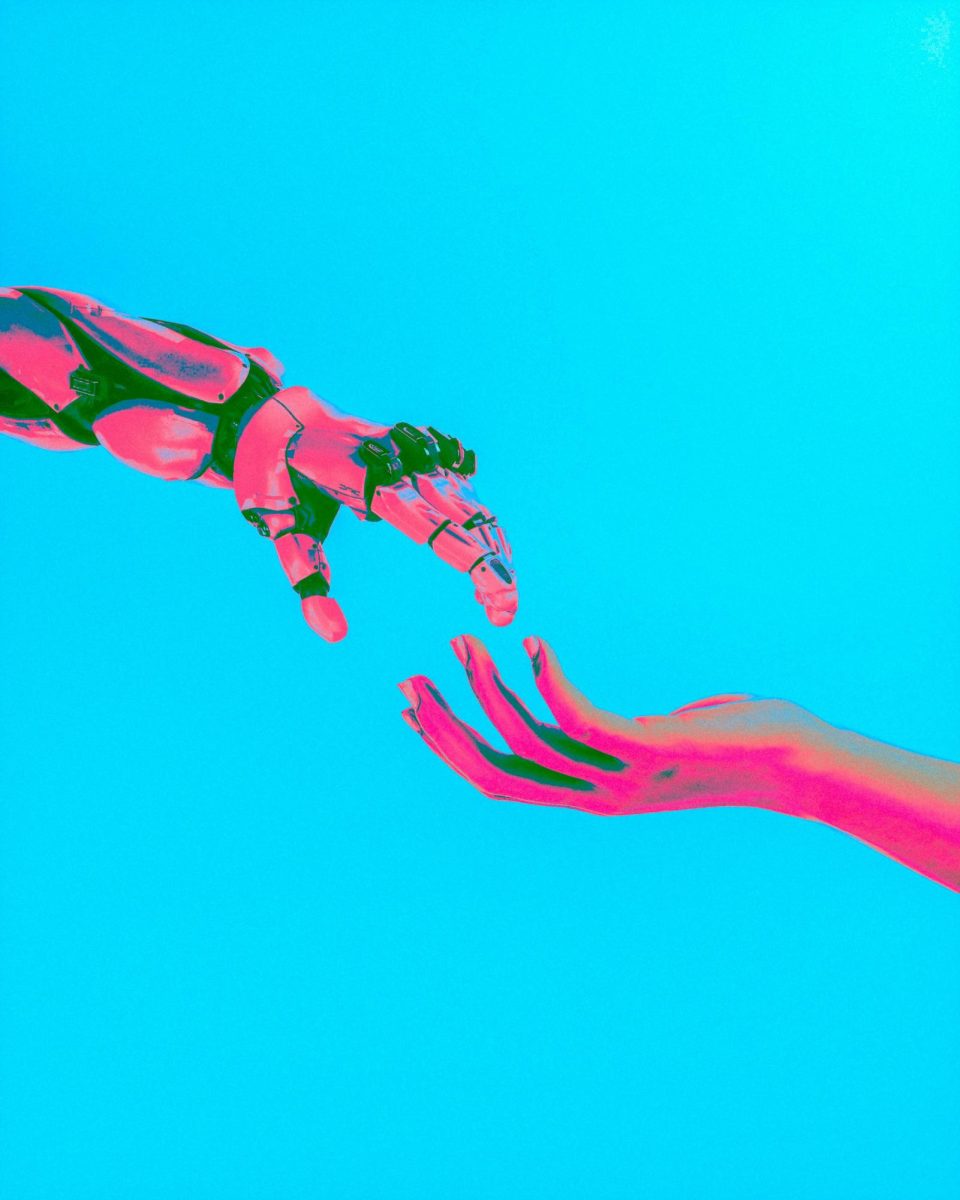
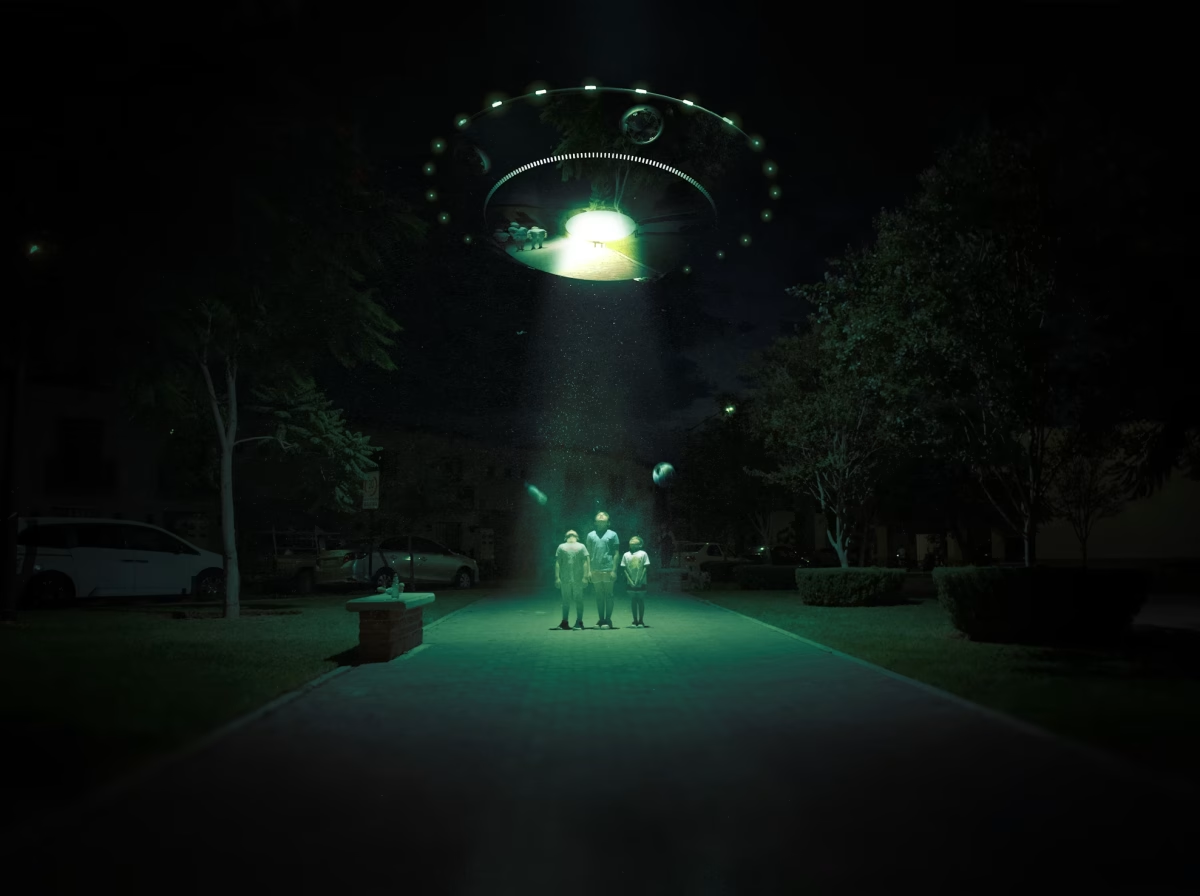
The sky above Minneapolis was the color of an iPhone, set to a dead Twitch stream. An agent caught in ice executes a meticulous quick draw while capturing it all on an iPhone.
Bang.
“F—— b—-,” he delivers, smoke curling from the barrel.
A bizarre postmodern maneuver — something one would expect from Ryan Gosling in “Blade Runner 2049,” not from a law enforcement officer.
But here we are.
The deets
America is a playground for the wealthy built atop extreme poverty. A glowing city stacked vertically, where the rich tower above the proletariat. Authority now invokes “Neuromancer,” Cyberpunk 2077, “RoboCop” — the list of cyberpunk dystopias aligning uncomfortably well with the present moment is startling.
The powerful, those aligned with the prevailing narrative, appear able to exercise extraordinary discretion — even over life and death.
At least, that is one of the stories.
It is the version most likely to proliferate, reinforced through education, media and the quiet gravity of institutional bias. It is a frightening story, and like all Lovecraftian horror, it contains an element of truth.
But it is not the part that should keep us awake at night.
In “Neuromancer” and classic cyberpunk, government and corporations possess a cartoonish, 1980s anime-style evil. They know they are the villain. They sell human minds to corporations and eliminate dissent without illusion or apology.
That was science fiction.
What fiction failed to predict is that those in power would not see themselves as the evil corporation. Instead, they — like college students, activists and dissidents — cast themselves as the countercultural hackers fighting the system.
This was true before Donald Trump’s reelection. It is even more true now.
Figures at the center of viral confrontations are not perceived by their supporters as authoritarian symbols. Understanding this moment — without endorsing it — requires entering the mind’s eye of those involved.
In that internal cinema, Nine Inch Nails plays. The wind cuts across a buzzed scalp and a steel-leather trench coat. Snowballs arc through the air, thrown by those who reject a system the figure believes, sincerely, he is defending.
At minimum, it is emotionally literate to acknowledge that the unusual actions of federal enforcement have produced unusual reactions. Law enforcement agents — some new to the role, some repurposed — are being treated differently by both their institutions and the public than traditional officers.
And they are filming it.
For fans.
Just as a braindance in Cyberpunk lets you relive another person’s final moments tearing through Night City, social media now delivers death in 4K. The American public — and the developed world more broadly — has never been asked to metabolize this volume of violent intimacy.
This journalist is old enough to remember that in 2012, watching someone die online required effort. You had to seek out the darkest corners of the internet, navigate sketchy browsers and stumble into places most people never wanted to go.
Honestly, they were simpler days.
Now, all you have to do is look up.
Sometimes, you don’t even have to do that.
The real villain
The real antagonist is not a superintelligent AI in the cinematic sense, but the algorithm itself — the opaque machinery of X and its peers. Its power lies in timing: inserting traumatic imagery into a feed at the precise moment a user is most emotionally vulnerable.
The sensory details of death — the metallic tang of blood, the warmth, the shock — flow directly into the bloodstream like a handheld cyberspace IV.
There is no incentive to de-escalate. In the attention economy, outrage pays. Trauma retains.
Negativity bias — the psychological tendency for bad experiences to outweigh good ones by a factor of five — is foundational human wiring. Recent research suggests online media consumption exploits this bias with ruthless efficiency.
This is why cities like Minneapolis, and America at large, appear trapped in two or more mutually exclusive realities.
They are not disagreeing.
They are living in different worlds.
Where reality and illusion collide
William Gibson predicted a world where cyberspace and reality blur into one — where digital ghosts speak, addicts fund the corporations that immolate society for profit and high technology coexists with low life.
Gray smog. Cultural fragmentation. Police clashing with executive authority. Streets filled with people carrying entirely different narratives in their heads.
In the 1960s, five television channels delivered the same reality in slightly different tones. Today, there is no shared substrate. Each individual occupies a personalized informational universe, curated by machines with more processing power than any computer used to send humans to the moon.
This is not 2077.
Ana de Armas is not for sale as a holographic companion.
But digital girlfriends exist. Synthetic intimacy, like algorithmic outrage, delivers tailored realities directly into receptive minds.
This is America in 2026.
Everyone is asking the same question:
Why is it all falling apart now?
The answer is painfully simple. Collapse is profitable.
The fracture itself is becoming a product. Division, addiction and dependency — on drugs, sports betting, pornography, ultra-processed food, social media and AI — are not side effects. They are features.
Even in the dark night of the national soul, someone is making money.
The cost may be the soul of the country itself.
Yet this is not a call to despair.
Unplug
There is still hope. The tension exists precisely because people are not yet fully disconnected from reality.
Put down the phone.
Touch some grass — snow, for now.
Find a third place: a coffee shop, a library, anywhere not optimized for engagement metrics.
Talk to someone who looks like they might disagree with you. See them as a person. Try to understand why they believe what they believe.
The physical world is chaotic, uncomfortable and profoundly human. But it is only there — off keyboards, in that imperfect, meaty reality — that we can remember what connects us.
The cyberpunk writers of the 1980s foresaw this moment.
Cyberspace will not save America.
We will.
Together.
In reality.