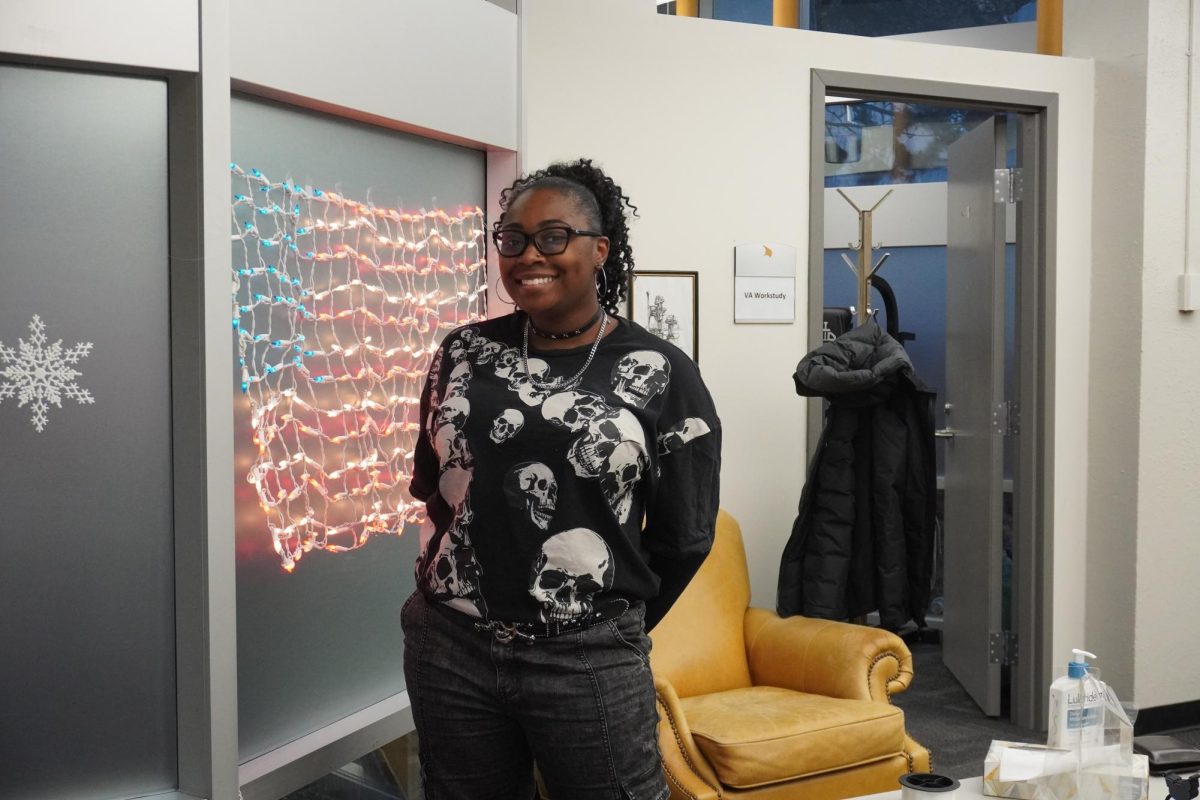
The door to Oakland University’s Veterans Support Services office stood open when a hurried journalism student stepped inside, still catching her breath after rushing from class. The space looked warm and not like a typical campus office—boxes of ornaments lined the table near the front, their lids folded back as staff sorted through strands of Christmas lights for the half-decorated tree in the corner. Navy veteran Nyah Haynes was carrying one of the boxes when she noticed the visitor, shifting it carefully onto the counter as a coworker joked that she had an interview waiting. Despite the sudden interruption, Haynes greeted the student with an easy smile, the kind that made drop-ins feel planned and strangers feel expected.
The Hidden Labor of Transition
Student veterans often go unseen on campus. Not because they are hidden, but because their transitions into academic and emotional life happen quietly, away from lecture halls and dining rooms, in rooms like this one where the door is always open and the work is always ongoing. The labor behind that transition is rarely acknowledged: benefit troubleshooting, trauma-informed listening, academic pacing support, and the steady acts of helping that hold a student together as they adjust from military rigidity to academic freedom.
Oakland University serves more than 275 veterans, service members, and military-connected students through Veterans Support Services. For some, the shift to higher education offers stability; for others, it creates new challenges—benefit confusion, class scheduling difficulties, mental health needs, and the abrupt culture change of entering classrooms filled with younger peers. The office exists because these changes aren’t simple, and because national reintegration patterns show similar struggles. At OU, these broader trends become deeply personal.
Inside the VSS Office
Inside the office, the setting is both practical and emotional. Students wander in for snacks, questions, or a place to decompress. The tree in the corner, still bare on one side, feels symbolic: a work in progress, decorated collectively by people trying to build something steady.
This is the environment where Haynes works and studies — and as both staff member and veteran, she understands the transition from two sides.
From Paperwork to Personal Stories
“A typical day starts off with answering emails,” Haynes says. “People have questions about what benefits they can utilize, how long they have the benefit for, what classes they’re taking. Because we have several different types of benefits, there’s different criteria and different help that each one of those students might need.”
What begins as paperwork quickly becomes personal. Veterans entering college often must relearn how to make choices.
“In the military, you’re told that what you do has to be done by the end of the day,” she says. “You don’t have the free will to choose what you do.”
At school, that freedom can be overwhelming. Choosing classes becomes a challenge. Designing a semester-long plan feels abstract compared to day-by-day military directives.
“Sometimes we rush ourselves,” Haynes says. “Other times we get confused working in a group because the way we communicate in the military is different than in an academic setting.”
The academic adjustment goes deeper than time management. “Showing up to class isn’t difficult,” she says. “The challenge comes from having to put yourself in a whole bunch of different topics.”
Emotional Weight and Student Loss
A moment that stays with Haynes involves a student who wasn’t a veteran but used education benefits transferred by a parent who passed away.
“Sometimes we’re dealing with people who have had loved ones pass away that have actually given them benefits,” she says. “The weight of their family kind of falls on our shoulders.”
Invisible Injuries, Different Compassion
Veteran students also face their own quiet battles. Some arrive with physical injuries; others with PTSD or chronic anxiety.
“They’re dealing with physical and emotional challenges that make going to school a little bit different for them, so we have to treat them with a different way of compassion and understanding,” Haynes says.
Support continues through DSS Veteran Resources, which offer accommodations ranging from extended test time to reduced-distraction environments.
The Age Gap
“A lot of us are older,” Haynes says. “You have people in their 30s, 40s. We’re not used to being around such a naive audience of people. You mature quicker in the military.”
That maturity follows veterans into the classroom.
“Even if you’re someone like myself that went into the military at 18 and you get out at 23–24, your mind is going to be a lot more progressive than your average 23–24-year-old that hasn’t had that real world experience,” she says.
The VSS office becomes a refuge where veterans can talk without performing or explaining.
A Community Held Together
“When veterans come out, they don’t have family. They don’t have a community,” Haynes says. “We support each other because the military can be very difficult.”
Even as veterans support one another, the office itself faces constraints.
“We’re a niche community,” Haynes says. “Sometimes we have to put extra advocacy on events or contribute our own money.”
Still, she remains grounded in purpose.
“You learn how to approach people with a level of compassion that isn’t normally given,” she says.
People come through the door carrying different histories, different injuries, different hopes. “Some have been in life-or-death situations,” she says. “Free college is the light at the end of the tunnel.”
Closing Scene
By the time the interview ended, the Christmas tree had gained a few new ornaments. The lights on the table were nearly untangled. Students walked in and out, pausing to ask questions or linger in conversation. The room looked the same, but something about it felt deeper: a place where quiet labor carried heavy stories, where transitions were made possible by people steady enough to hold them. The boxes might be empty now, the decorations hung, but the unseen work of helping veterans build a new life continued in the back room long after the visitor left.