Scoring goals in matters of corruption, lack of transparency and human rights abuses, FIFA leaves the scoreboard 3-0 in favor of private economic gains—even before the ball hits the court for the 2026 World Cup.
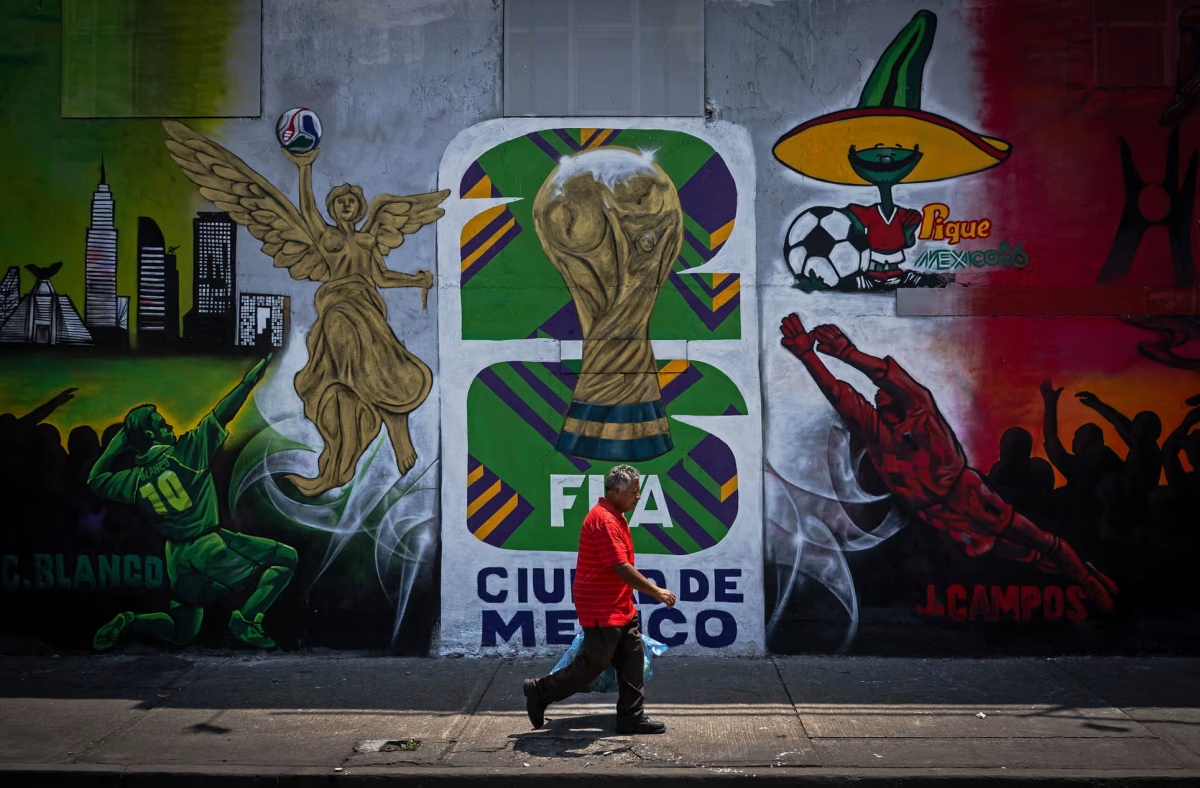
With almost eight years in the making, the 2026 soccer World Cup opens new horizons in North America by assembling a team of three host countries: Canada, the United States and Mexico. Similar to previous tournaments, Mexico is likely to lose, now beyond the grass field as a legacy of abuses by FIFA kicks off a season of marginalization for locals.
FIFA’s record of human rights abuses
With a renewed commitment to human rights, labor rights and environmental sustainability, FIFA has championed Mexico as a host country even when the partnership between them lacks any of the outlined commitments.
The previous World Cups in Russia and Qatar serve to understand the mechanisms that have left over 6,500 workers dead in the last decade and now threatens to leave more than 2,600 Mexican nationals without homes.
“The last two World Cups, Russia 2018 and Qatar 2022, received the worst evaluations from FIFA’s specialized group, according to the 2018 and 2022 bid reports published by the football governing body,” ESPN Sports reported.
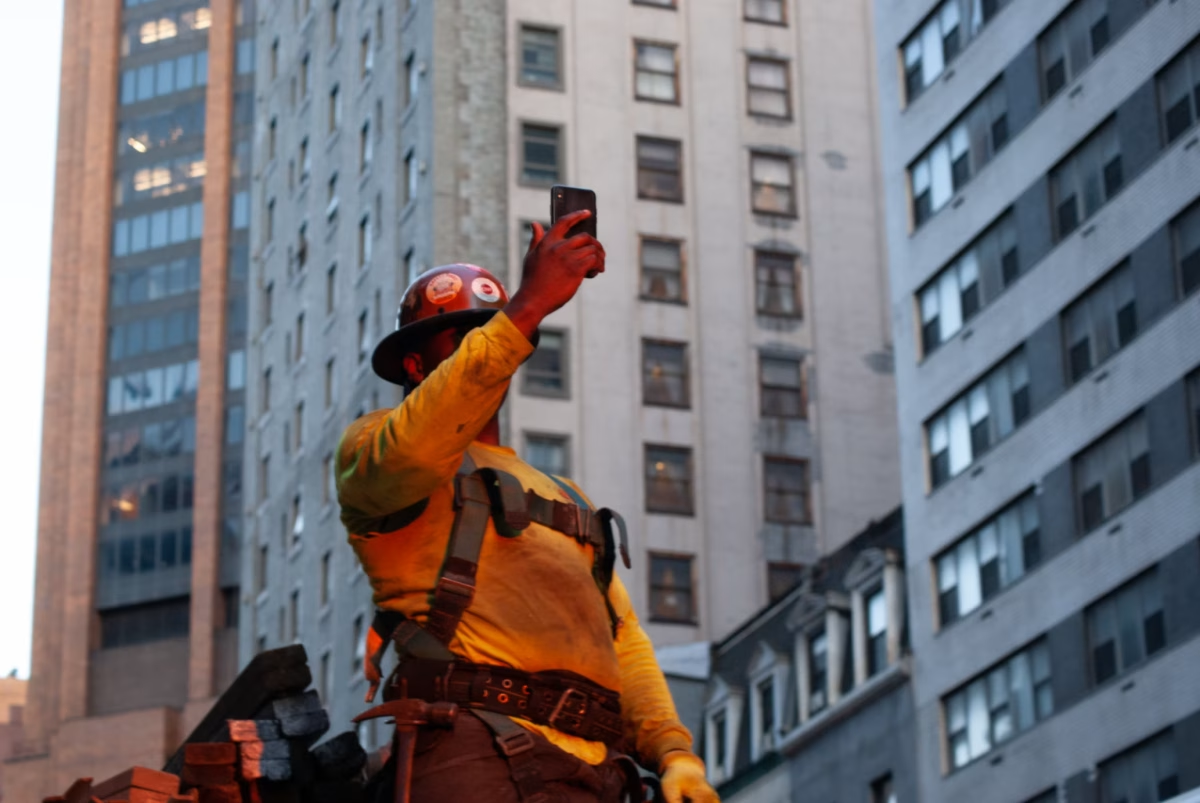
For the 2018 World Cup, 21 workers were killed as a result of abusive labor practices during construction and renovation operations, Building and Wood Workers’ International (BWI) reported. By 6,500 migrant workers from across Asia had died preparing Qatar for its global tournament.
While the accusation of modern-day indentured servitude and the resulting deaths of thousands of workers caused policy changes inside FIFA and with its international partners, these came after coordinated attempts of censorship and misattributing responsibility.
After failed attempts to negate the human rights violations, FIFA reviewed the cases and created a report stating a “responsibility” to compensate those affected with the creation of a $45.8 million “legacy fund.” FIFA resisted calls from unions, representatives and affected families while avoiding specific clauses for impacted worker compensation in the fund.
Violation of the right to housing in Mexico
Replicating the same lack of transparency, now in Latin America, BWI reported that FIFA denied and blocked investigations to ensure safe and fair working conditions in Mexico. While no workers have been reported dead in connection with the infrastructure building operations, “this refusal raises serious concerns about its human rights and labor obligations,” BWI said in a press release dated March 11, 2025.
Nonetheless, the right to housing has taken a blow, with the World Cup aggravating the gentrification problem Mexico City has had for years.
“According to data from the capital city government, between July and October 2025, approximately 2,600 complaints of dispossession were registered,” Megantoicias MX reported.
Neighborhood organizations fighting for the right to housing explained that forced evictions have become more violent and recurrent in tourist zones near stadiums. They also accuse the real estate sector of co-opting the judicial power and the local congress.
FIFA’s commitment to human rights in partnership with Mexico results contradicting as the Mexican congress recently struck down protections to constitutional housing rights.
“We have all directly suffered from the real estate speculation,” Arturo Aparicio, a lawyer for a housing rights collective, said in an interview with Pie de Pagina. “Some of us have suffered evictions because of it and have seen the rent prices in the places we used to live triple or quadruple, with the buildings now used for Airbnb and other digital platforms for short-term rentals.”
Less water and more pollution
In the neighborhood surrounding the Aztec Stadium—the most important venue for the tournament in Mexico—locals have also protested the shortage of water, coinciding with opaque construction operations that aren’t subject to scrutiny by the local authorities.
“In this area, water does arrive regularly, but through rationing: one day there is service and two or three days there isn’t,” Adolfo Lara, teacher and local resident, said in an interview with El Independiente. “Allowing this type of construction in the upper areas of [the neighborhood] will increase demand and worsen the water shortage for those of us who already live here.”
The irregular construction of 30 buildings with private water tanks, in some cases owned by the television stations affiliated with the tournament, makes the situation critical even after the soccer teams leave the country.
“The law stipulates that every construction project must have an information banner indicating how many apartments will be built, who the responsible company is and who is managing the project,” Lara said. “None of this is being complied with. Absolutely none of these requirements are being met and despite the complaints, the authorities are not taking action. This can only be explained by possible collusion between authorities and real estate developers.”
As water leaves the homes of thousands in the capital city, Alvaro Zavala, director of Mexico for climate, explained that only in Mexico there will be a CO2 emission of 9 million tons during the tournament—the equivalent of what a medium-sized city would emit in a year.
With FIFA’s lack of commitment to its labor and human rights protections, its sustainability efforts will likely advance global warming instead of mitigating it.
“Sustainability doesn’t fail due to a lack of ideas; it fails due to a lack of will and mechanisms to measure what is promised,” Zavala said. “Many times, sustainability remains only in discourse.”
Even before all participant countries are selected, thousands across Mexico are already counting their losses thanks to the World Cup. In the meantime, FIFA and the Mexican government’s commitment to human rights stands in stark contrast to their increased abuses in more areas than those seen before.