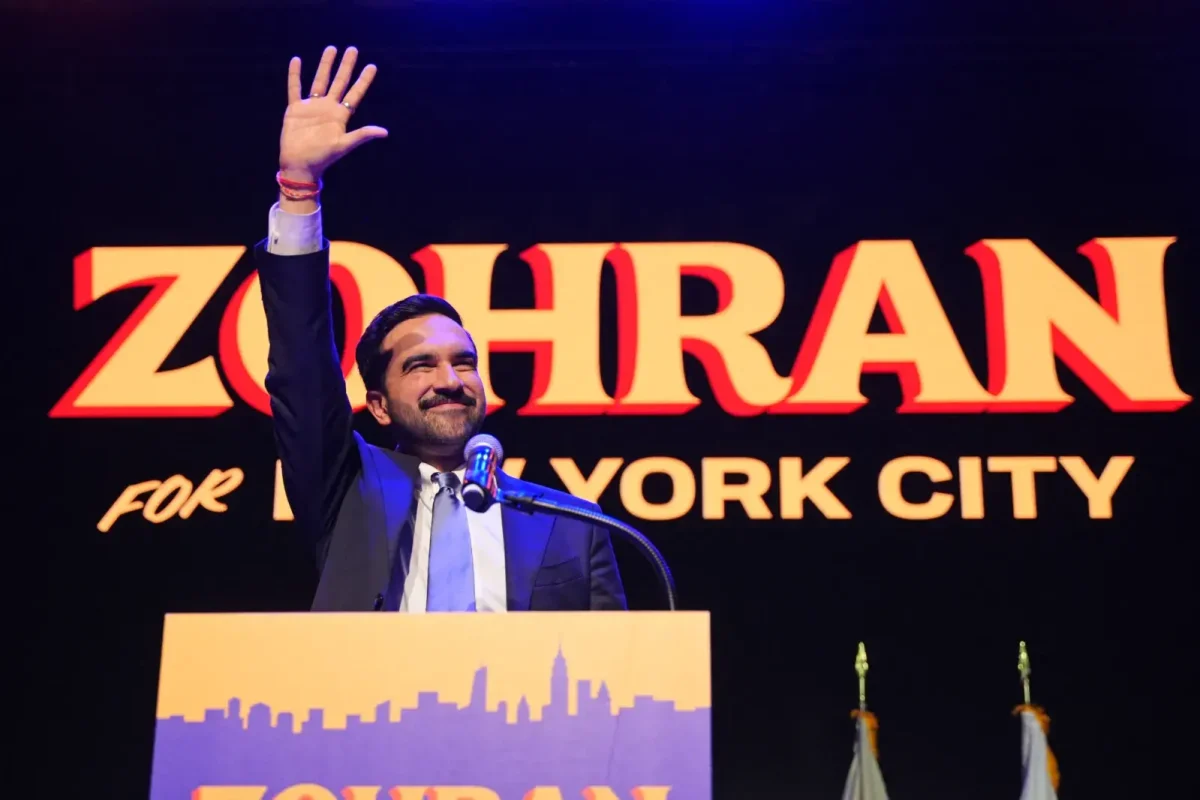
Zohran Kwame Mamdani has become New York City’s first Muslim and person of South Asian descent to become mayor, as well as the youngest person ever to fill the role at just 34 years old.
Formerly a state assemblymember and current member of the Democratic Party, Mamdani beat out Independent nominee and former New York Governor Andrew Cuomo and Republican nominee Curtis Sliwa.
Mamdani faced a fierce election battle against the two candidates, ultimately leading to his success in the November election. What made his campaign so successful?
Oakland University Professor of Political Science, Terri Towner, Ph.D., believes that coalitions and Mamdani’s ability to attract diverse voter groups were major aspects of his political success.
“It matters when a city as diverse as New York elects a young leader of color because representation shapes how people see themselves in the political process,” Towner said. “When voters see someone who reflects the city’s demographics and understands their lived experiences, it strengthens trust, participation and a feeling that government can work for them. Mamdani’s win signals that political leadership isn’t to a narrow demographic.”
Groups of people who work together in a common interest to achieve a certain goal, known formally as coalitions, offer leverage when helping elect government officials.
“Mamdani’s platform addressed cost-of-living issues, particularly affordable housing, fare‐free buses and city-owned grocery stores, that affected many demographic groups,” Towner said. “Those kitchen-table issues cut across age, race and neighborhood lines, which helps explain why his message resonated so widely. Mamdani’s campaign succeeded because it combined a strong ground game with a clear message about economic and social equity. For political scientists, it’s a compelling example of how coalition-building and strategic communication can reshape electoral outcomes.”
According to a voter poll conducted by Tufts University Tisch College, 75% of all young voters (ages 18-29) in this recent election voted for Mamdani. In addition, 82% of women, 83% of Black youth and 85% of Latino youth who voted in this election also voted for Mamdani. These demographics reflect strong support for Mamdami among young, diverse populations.
Considered one of the most diverse cities in the world, the mayor assumes the significant responsibility of representing all New Yorkers.
As an immigrant, born in Uganda and having moved to New York City at the age of seven, Mamdani has made it clear that he will ensure immigrants receive the safety they need under his new administration.
“New York will remain a city of immigrants, a city built by immigrants, powered by immigrants, and as of tonight, led by an immigrant,” Mamdani said in his victory speech.
Mamdani ran on a campaign of strong, transformational change for the lives of New Yorkers.
“I’ll use every tool available to bring down rent, create world-class public transit and make it easier to raise a family,” Mamdani said.
An additional aspect that Towner pointed out was Mamdani’s marketing skills and his outreach towards young voters.
Mamdani crafted his campaign with bold, vivid colors, switching out the traditional red and blue — making his unique marketability “modern and relatable,” according to Towner.
“He used this visual branding to position himself as an alternative to the traditional or the ‘old guard.’ Very clever to appeal to the New York City street vibe,” Towner said.
Mamdani has been utilizing new forms of communication to reach voters, such as reaching out to his 3.3 million followers on TikTok.
On his social media page, Mamdani was seen talking to crowds of young New Yorkers, visiting bodegas, speaking in Hindi and Arabic and participating in other public acts of campaigning that were not commonly practiced by his political opponents.
Mamdani is educating voters and getting them involved, teaching them how his initiatives will better their ways of living.
Since winning the election, Mamdani’s new administrative plan, the Transition, has already received $1 million dollars in donations and over 50,000 job applications.
His plan focuses on strengthening City Hall and making the cost of living affordable for New Yorkers and “solve old problems with new solutions.”
To accomplish this, Mamdani will appoint top organizers, government officials, policy experts and working class people “who know better than anyone what our neighborhoods deserve.”
“It’s not about who you know, it’s about what you do. City Hall will soon be known as a source of support for New Yorkers — and an example of what our best and brightest can achieve,” Mamdami wrote on X.
Mamdami will assume office on Jan. 1 and Eric Adams will leave office. Love him, or hate him, there’s no denying a new, transformative era of NYC politics will begin.