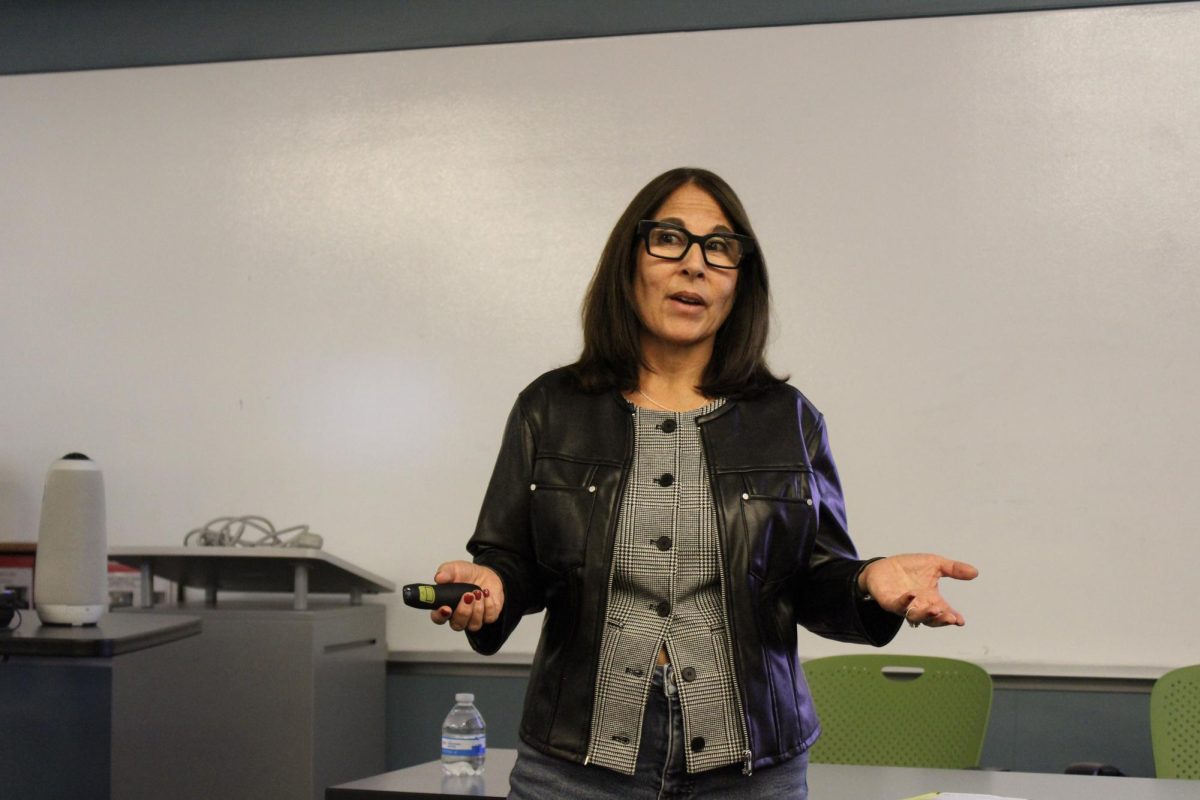
The Detroit chapter of the Public Relations Society of America held its “From Cringe to Confidence: Mastering Authentic Networking” workshop on Wednesday, Nov. 12, featuring Michelle Gilbert, founder of Purple Engine Coaching and Consulting.
With 34 years of experience in public relations and corporate communications — and now, a certified coach — Gilbert led students through practical strategies for building genuine, lasting connections. The workshop drew a mix of communication, business and marketing students eager to learn how to navigate professional interactions more comfortably.
Gilbert opened the session by emphasizing the heart of her coaching philosophy: helping people navigate uncomfortable conversations in the business world. Networking, she explained, often feels intimidating because many approach it as a one-time task rather than an ongoing relationship-building process.
“Authenticity matters,” she said. “People connect with real conversations, not pitches.”
Gilbert then invited participants to share the common struggles they face while networking. Students cited fears of rejection, imposter syndrome and feeling out of place in professional settings. She reminded the audience that mistakes are normal and that building connections takes time. Reframing networking as cultivating relationships — rather than merely collecting business cards and email addresses — can remove much of the pressure.
Gilbert encouraged attendees to rethink what “good networking” really means. Rather than trying to impress someone, she said, the goal should be to gain permission to enter a conversation, build trust and create long-term bonds. Approaching networking the same way one approaches forming a new friendship, she noted, helps make the process feel more natural. She emphasized that networking is a skill anyone can develop, regardless of personality type or experience level.
Gilbert advised participants to set personal goals before attending events. Who do you want to meet? Why? What would a successful night look like? She recommended researching the event ahead of time, reviewing any attendee list and even reaching out to organizers for additional context. Following event hashtags or organizational social media pages, she added, can help students enter conversations with greater confidence and awareness.
Authenticity came up repeatedly as the group discussed confidence and intimidation during conversations. Gilbert recommended scanning the room for open body language, joining approachable groups and using curiosity-driven questions to spark dialogue.
“You don’t have to be the most extroverted person in the room,” she said. “You just have to be interested.”
Students also sought advice on approaching older or more senior professionals. Gilbert encouraged them to “do your homework.” Finding a point of connection — an organization, a recent accomplishment or a shared interest — can help make the interaction feel more natural. She noted that preparation not only eases nerves but demonstrates respect for the other person’s time.
Gilbert emphasized that the event itself is only the starting point. The real work, she said, begins afterward. She urged attendees to send personalized follow-up messages through email, text or phone call.
“Mentioning a specific moment from a previous conversation can help make the message more memorable,” she said.
In the final discussion, Gilbert addressed how to balance persistence without becoming overbearing. She said timing follow-ups appropriately and finding alternative ways to stay on someone’s radar can be effective strategies.
The workshop’s closing message: don’t take delays personally. Professionals are busy, and a gentle, respectful reminder can reopen a conversation and lead to new opportunities. Gilbert added that consistency and patience are often what set successful networkers apart, especially early in their careers.